能否说一口不带口音的英语?
Is it possible to speak English WITHOUT an accent?

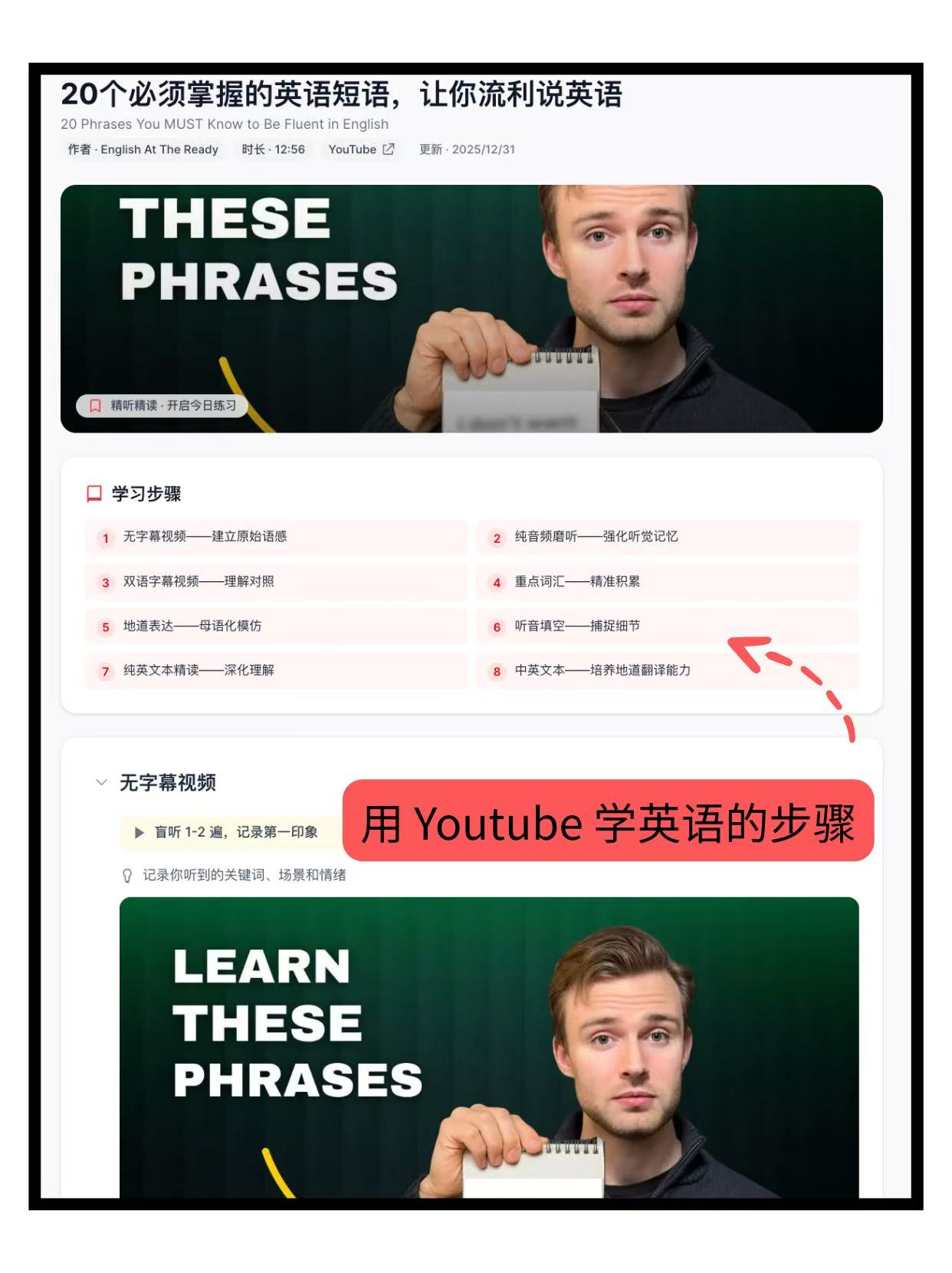
学习步骤
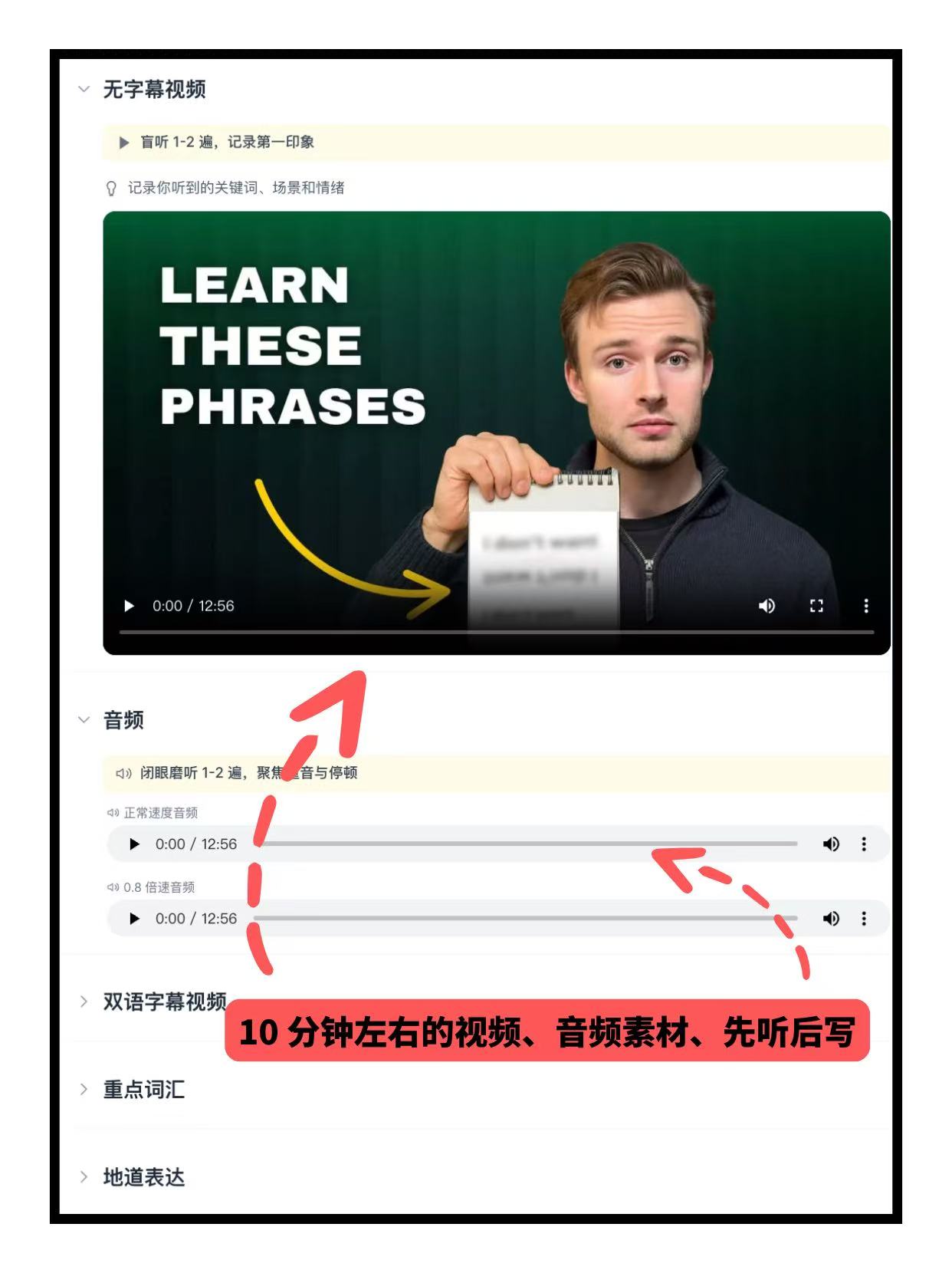
- 1无字幕视频——建立原始语感
- 2纯音频磨听——强化听觉记忆
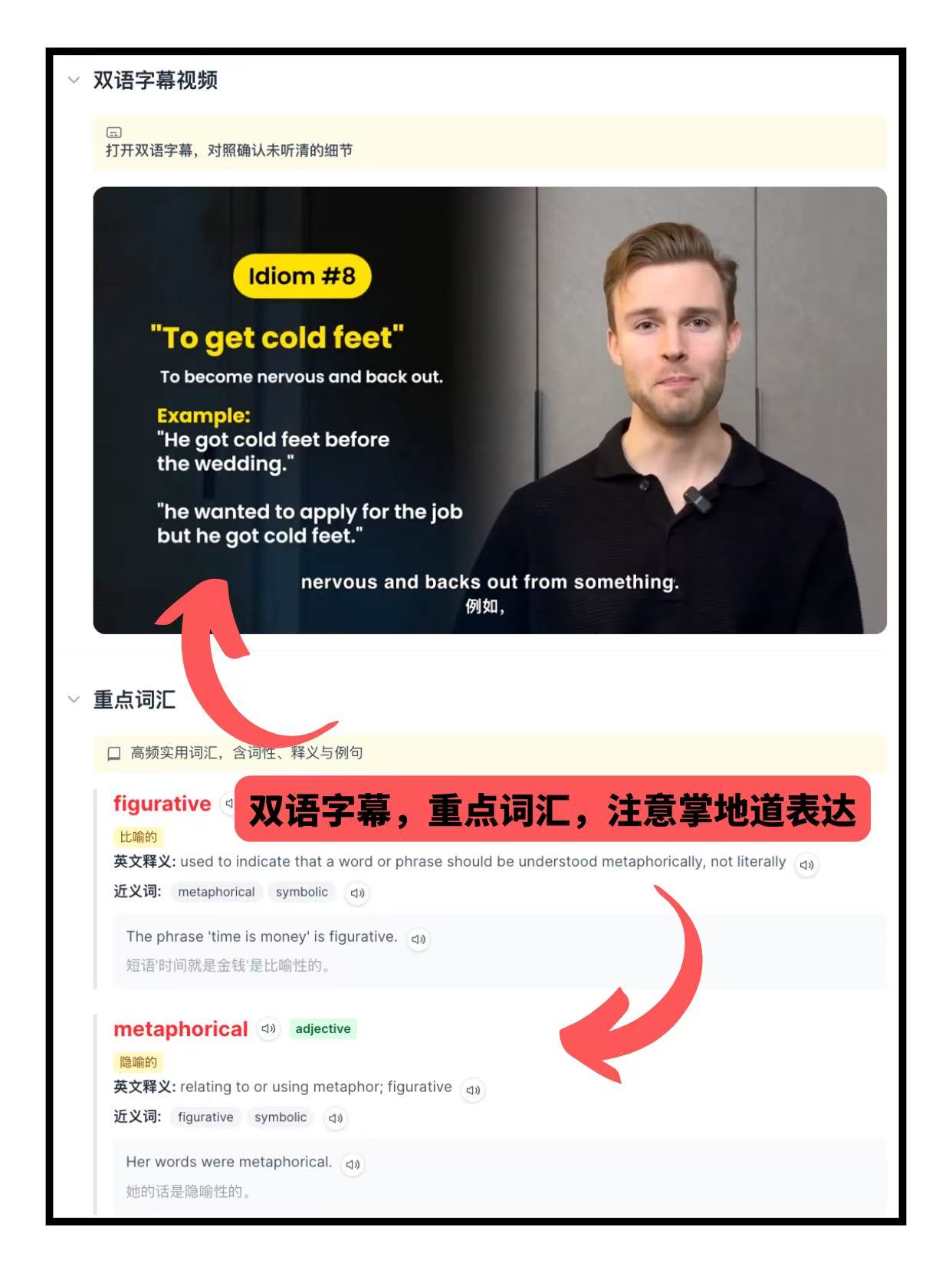
- 3双语字幕视频——理解对照
- 4重点词汇——精准积累
- 5地道表达——母语化模仿
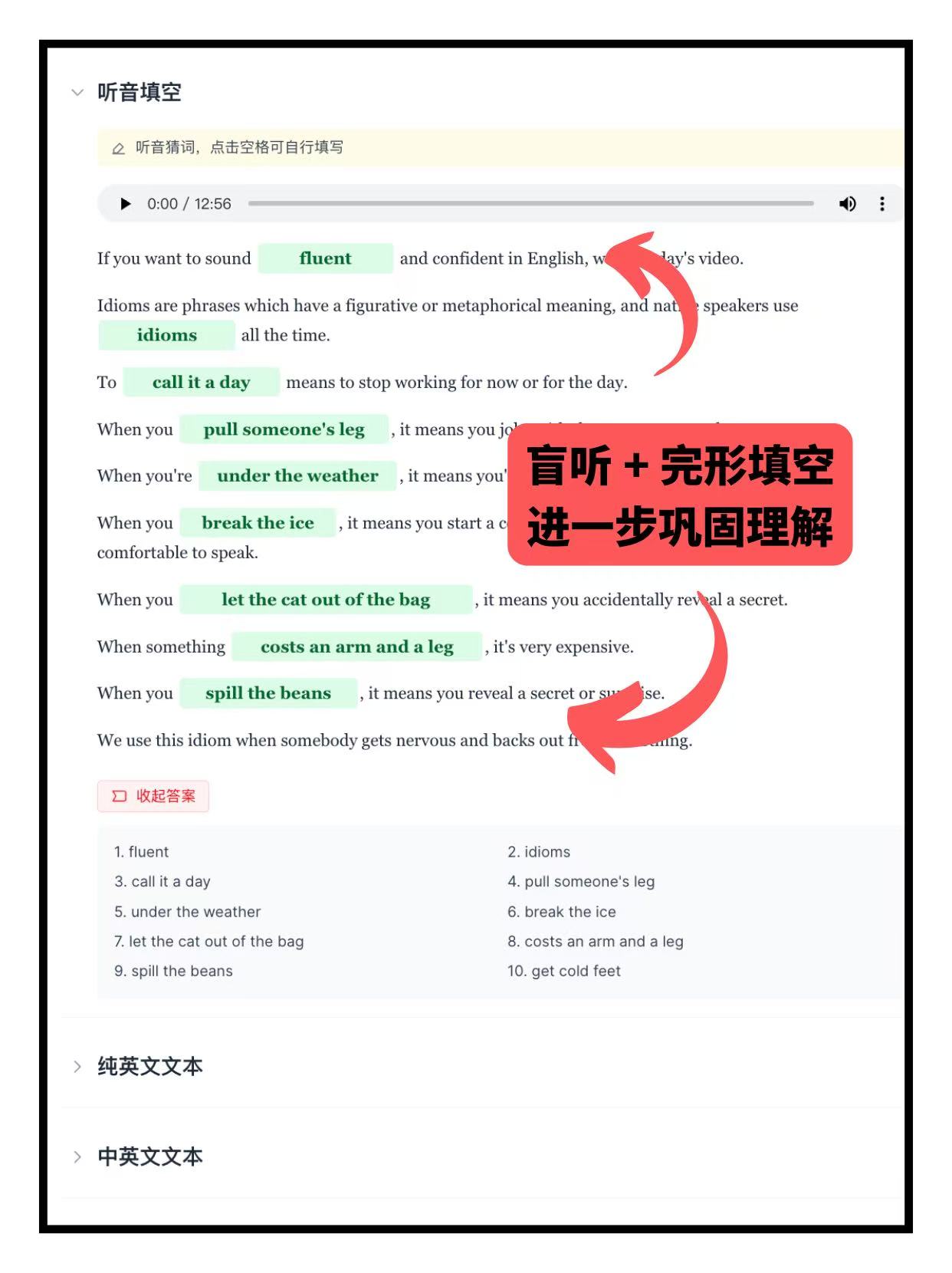
- 6听音填空——捕捉细节
- 7纯英文本精读——深化理解
- 8中英文本——培养地道翻译能力
记录你听到的关键词、场景和情绪
Correct pronunciation is essential for clear communication.
正确的发音对于清晰的交流至关重要。
She is fluent in three languages.
她能流利地说三种语言。
He tends to exaggerate his achievements.
他倾向于夸大自己的成就。
She gave an animated speech.
她做了一个充满活力的演讲。
The actor portrayed the character convincingly.
这位演员将这个角色演绎得令人信服。
Shadowing can help improve pronunciation.
影子练习可以帮助改善发音。
Retraining your mouth muscles can help with accent reduction.
重新训练口腔肌肉可以帮助减少口音。
There have been instances where students mastered accents.
有一些学生掌握口音的例子。
Correct pronunciation should be your priority.
正确的发音应该是你的优先事项。
You should embrace your accent as part of your identity.
你应该拥抱你的口音,将其视为你身份的一部分。
hide the fact
She tried to hide the fact that she was nervous.
她试图隐藏自己紧张的事实。
go a step further
If you want to go a step further, you can practice speaking every day.
如果你想更进一步,可以每天练习口语。
take years of practice
Mastering a musical instrument takes years of practice.
掌握一门乐器需要多年的练习。
overnight
You can't become fluent overnight.
你不可能一夜之间变得流利。
go the extra mile
She always goes the extra mile to help her students.
她总是加倍努力帮助学生。
pay attention to
Pay attention to the way native speakers pronounce words.
注意母语者发音的方式。
sound like
He sounds like a native speaker.
他听起来像母语者。
be aware of
Be aware of how you move your mouth when speaking.
注意你说话时嘴巴的动作。
focus on
Focus on correct pronunciation.
专注于正确的发音。
embrace the fact
Embrace the fact that you speak more than one language.
欣然接受你会说多种语言的事实。
Is it possible to speak English without an ___?
I'm ___. I have a bit of a accent.
It's okay to have an accent, but you need to make sure that your pronunciation is ___.
In American English we say ___, but in British English they say .
It's not necessary because you can still be ___ in English with an accent.
If you can communicate your ideas without any problems. So if you really want to get to this level, if you do want to try to speak English, without an accent, then what can you actually do? Well, first of all, it really helps to live in an English-speaking country. I won't lie. If you do want to get to that level, if you do want to speak English entirely without an accent, it really helps you to be in that English environment. And not just for a week or two weeks. It does take time. It might even take years. So don't expect this to happen overnight. The second piece of advice I would give is to imagine you're an actor. And I say actor because this is something that actually native English speakers do as well, especially in Hollywood, in the movie industry. If you are an American and you're filming a movie with a British accent, you have to portray a character that speaks in a British accent. You need to go to accent.com. You actually need to go to a coach who will help you learn that accent. And I'm giving you this example because I want to show you it's not just about language. It's actually about retraining the way you move your mouth, the way you position your tongue, the way you actually pronounce certain vowels or sounds. Because this is something that native speakers go through as well when they're learning English. To pronounce things in a different accent, maybe for a movie. So this is something you can work on with an accent coach, a coach who specifically helps with accent. But it's also something you can try to work on on your own. Maybe you've heard of the technique called shadowing. Shadowing is basically where you listen to a native English speaker, either on the radio, on the TV, in a podcast, can be anywhere. And you repeat after them and you try to imitate their pronunciation. So essentially, it's like you're a parrot. You're listening and you're repeating and you're trying to copy their pronunciation. Now, this is really a good strategy, but I would also recommend you practice watching the way native speakers move their mouths. So the way they're actually moving their facial muscles, their lips, their tongue, even if you can. Because every language has a different way of moving. And the way we move our mouth directly impacts the sounds we make. So it's natural that if you change the way you move your mouth, if you move your mouth in the same way a native speaker moves their mouth, it's natural to assume that you can change your pronunciation and you can make it sound more natural and more like a native speaker. You'll notice that in English, we often exaggerate a bit. We move our mouth a bit. We're very animated, especially in American English. And this is something that I often encourage my students to practice or at least to be aware of. Because as I said, this has a direct impact on your accent and on how natural you sound. Next time you're in conversation with a native speaker, or maybe you're just watching a movie, pay attention to the way they're moving their mouth, the way they're positioning their lips, their tongue, and of course, their facial muscles. Now, we've talked about accent. We've talked about pronunciation. And I just want to remind you that your priority should not be speaking without an accent. Because as I said, that's not actually possible. And your priority should not be trying to sound like a native English speaker. Your priority should be correct pronunciation and ___.
Maybe you've heard of the technique called ___.
You'll notice that in English, we often ___ a bit.
Next time you're in conversation with a ___ speaker, or maybe you're just watching a movie, pay attention to the way they're moving their mouth.
Your priority should be correct ___ and communication.
原声段落播放 · 点击任意句子即可播放
还没有选择句子
Is it possible to speak English without
能否不带
an accent?
口音说英语?
This is a question I get from students all the time,
这是学生们经常问我的一个问题,
so let's talk about this today.
所以今天我们就来聊聊这个话题。
Now first of all,
首先,
I don't actually think this is a good question to ask,
其实我认为这个问题本身问得不太好,