返回

如果你能做到这些…那你的英语就真流利了。

If you can do this... you're fluent in English.

作者 · English At The Ready时长 · 7:45YouTube更新 · 2025/12/19
如果你能做到这些…那你的英语就真流利了。
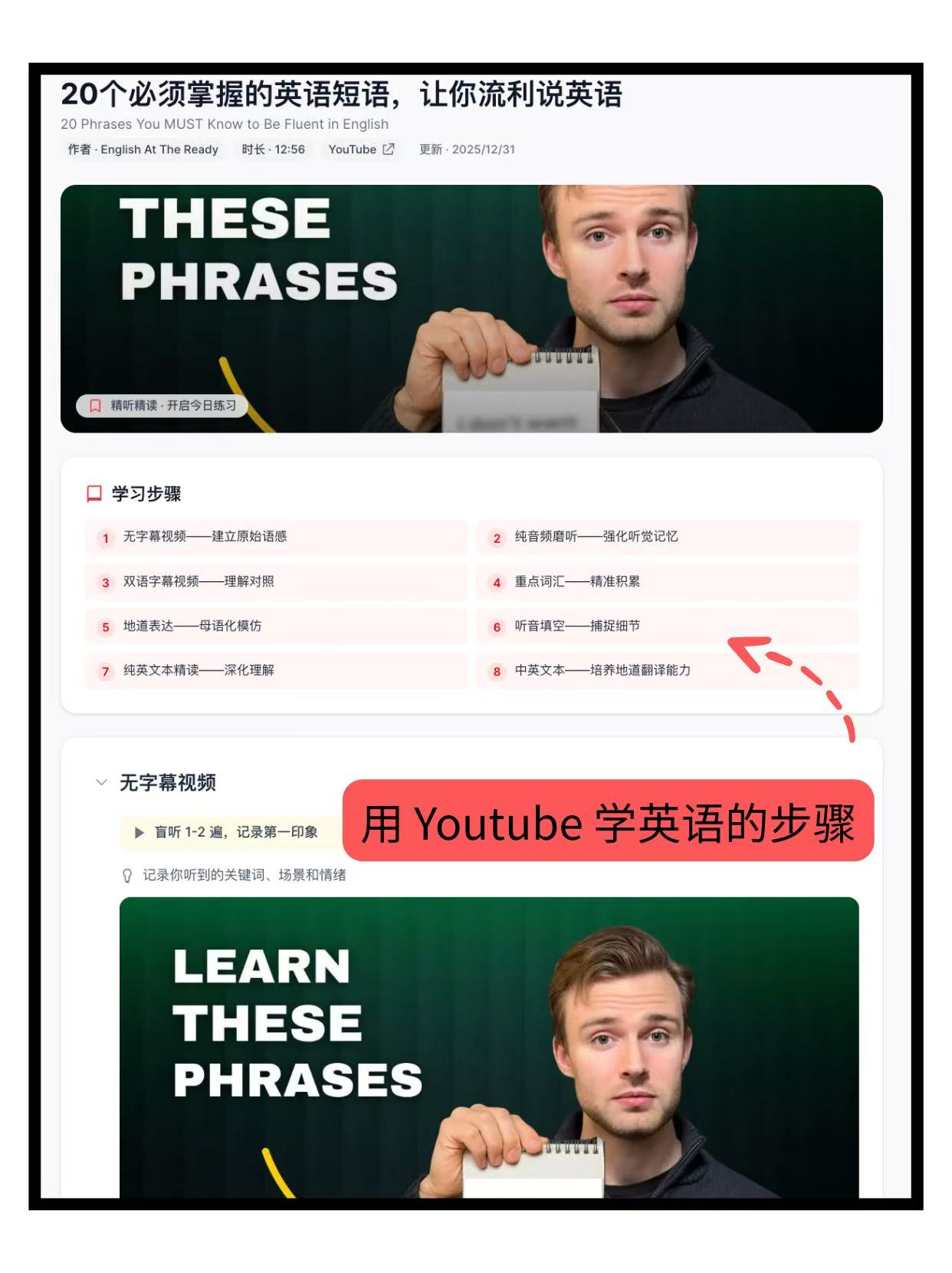
精听精读 · 开启今日练习

学习步骤

  1. 1无字幕视频——建立原始语感
  2. 2纯音频磨听——强化听觉记忆
  3. 3双语字幕视频——理解对照
  4. 4重点词汇——精准积累
  5. 5地道表达——母语化模仿
  6. 6听音填空——捕捉细节
  7. 7纯英文本精读——深化理解
  8. 8中英文本——培养地道翻译能力
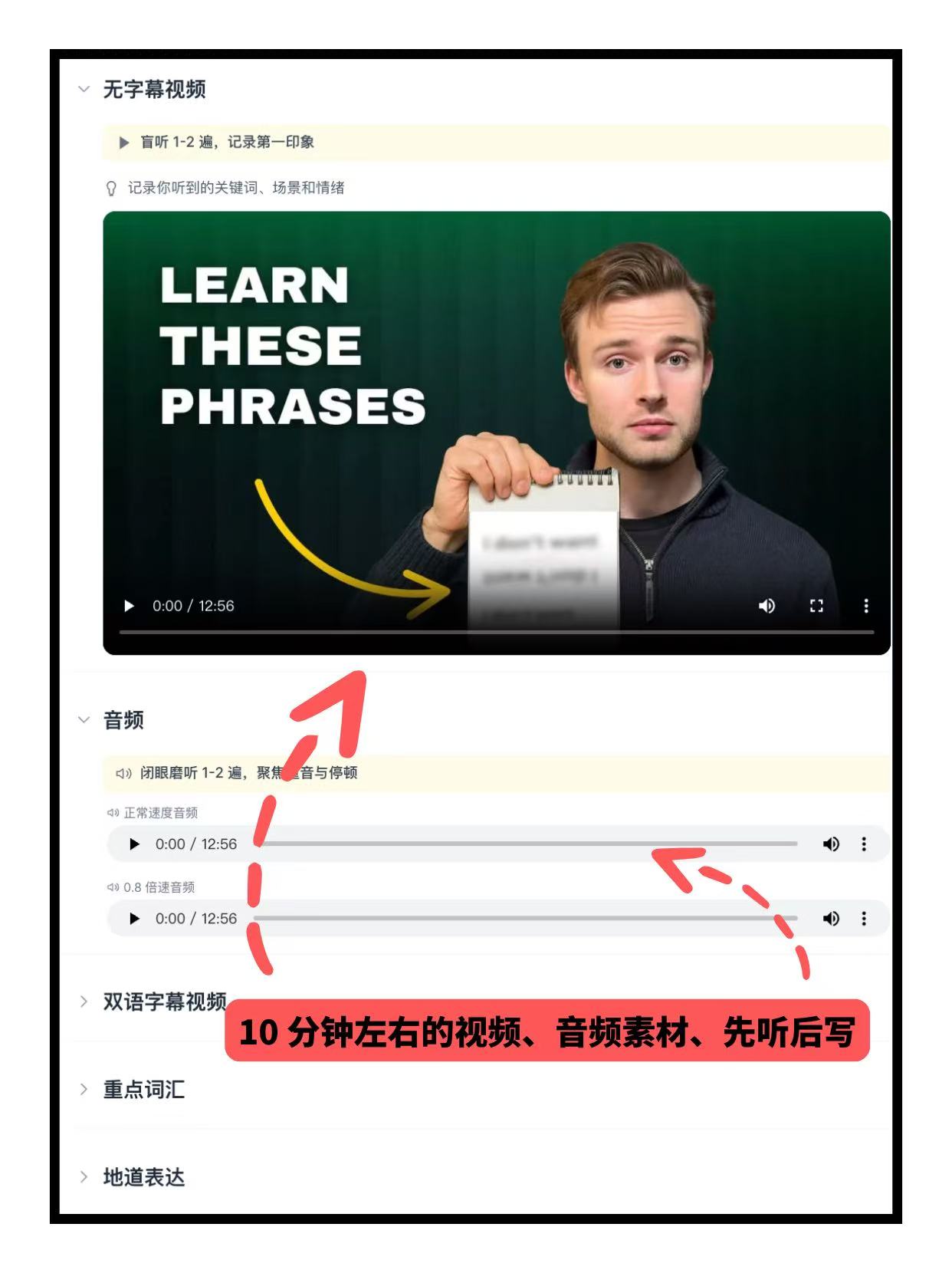
盲听 1-2 遍,记录第一印象

记录你听到的关键词、场景和情绪

闭眼磨听 1-2 遍,聚焦重音与停顿
正常速度音频
0.8 倍速音频
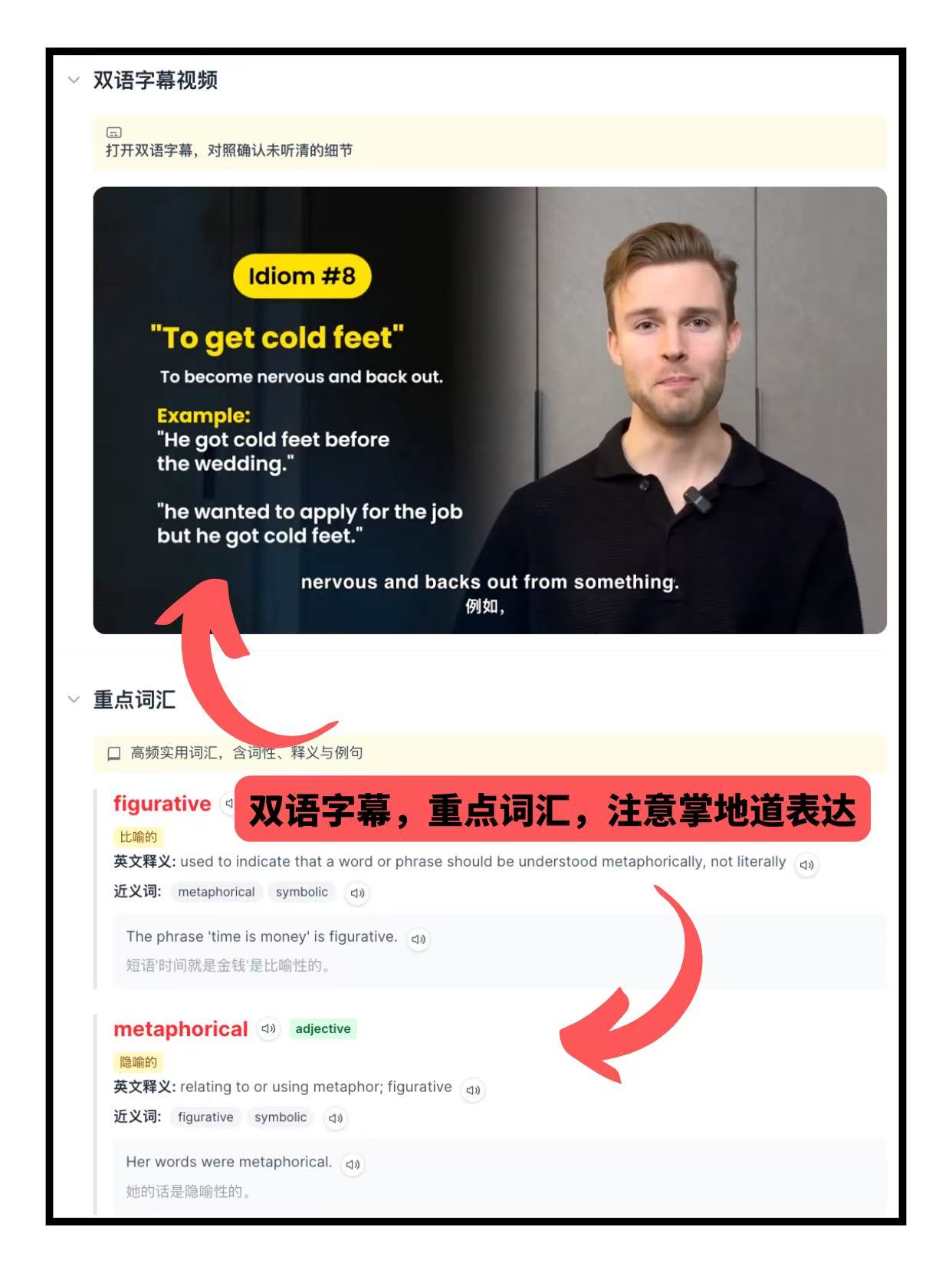
打开双语字幕,对照确认未听清的细节
高频实用词汇,含词性、释义与例句
fluentadjective
流利的
英文释义: able to speak or write a language easily and accurately
近义词:
proficientarticulateeloquent

She is fluent in three languages.

她能流利地说三种语言。

internalizingverb
内化
英文释义: to make attitudes or behavior part of one's nature by learning or unconscious assimilation
近义词:
absorbassimilateincorporate

He is internalizing the grammar rules.

他正在内化语法规则。

regurgitatingverb
反刍;重复
英文释义: to repeat information without understanding it
近义词:
repeatechorecite

The student was regurgitating facts without comprehension.

学生在不理解的情况下重复事实。

anecdotallyadverb
轶事地
英文释义: based on personal accounts rather than facts or research
近义词:
informallyunscientificallysubjectively

Anecdotally, many people report similar experiences.

轶事上,许多人报告了类似的经历。

consolidateverb
巩固
英文释义: to make something physically stronger or more solid; to combine into a single more effective or coherent whole
近义词:
strengthenreinforceunify

She consolidated her knowledge by reviewing daily.

她通过每天复习巩固了知识。

digestverb
消化;理解
英文释义: to break down food in the stomach; to understand or assimilate information
近义词:
absorbcomprehendgrasp

It takes time to digest complex information.

消化复杂信息需要时间。

metaphoricallyadverb
比喻地
英文释义: in a way that uses or relates to metaphor; figuratively
近义词:
figurativelysymbolicallyallegorically

He spoke metaphorically about life as a journey.

他比喻性地将生活描述为一段旅程。

restlessadjective
不安的
英文释义: unable to rest or relax as a result of anxiety or boredom
近义词:
agitateduneasyfidgety

She felt restless after drinking too much coffee.

喝了太多咖啡后,她感到不安。

likelihoodnoun
可能性
英文释义: the state or fact of something being likely; probability
近义词:
probabilitychancepossibility

There is a high likelihood of rain tomorrow.

明天下雨的可能性很高。

diarynoun
日记
英文释义: a book in which one keeps a daily record of events and experiences
近义词:
journallogrecord

She writes in her diary every night.

她每晚都写日记。

dream in English

释义: To have dreams where English is spoken, heard, or read, indicating fluency or familiarity with the language.
中文: 在梦中使用英语,表示对英语的熟练或熟悉。
用法: Used to describe the phenomenon of using English in dreams as a sign of language proficiency.

I knew I was fluent when I started to dream in English.

当我开始在梦中使用英语时,我知道我已经很流利了。

internalizing what you've learned

释义: Absorbing and making knowledge a natural part of your thinking.
中文: 吸收并使知识成为你思维的自然部分。
用法: Often used in the context of language learning or skill acquisition.

Dreaming in English is a sign of internalizing what you've learned.

梦中使用英语是你内化所学知识的标志。

sleep on something

释义: To delay making a decision until the next day to think it over.
中文: 推迟做决定,留到第二天再考虑。
用法: Commonly used metaphorically for decisions or problems.

I'll sleep on it and give you an answer tomorrow.

我会再考虑一下,明天给你答复。

a reflection of our daily lives

释义: Something that mirrors or represents our everyday experiences.
中文: 反映或代表我们日常经历的事物。
用法: Used to describe how dreams or other phenomena mirror reality.

Dreams are a reflection of our daily lives.

梦境是我们日常生活的反映。

increase the likelihood

释义: To make something more probable or likely to happen.
中文: 使某事更有可能发生。
用法: Used when discussing probabilities or chances.

Doing something in English before bed will increase the likelihood of dreaming in English.

睡前做一些与英语相关的事情会增加梦中使用英语的可能性。

anecdotal evidence

释义: Evidence based on personal accounts rather than scientific research.
中文: 基于个人经历而非科学研究的证据。
用法: Often used to describe informal observations or stories.

I've done this anecdotally with German and it worked.

我根据个人经验用德语试过,效果不错。

digest in your memory

释义: To process and absorb information so it becomes part of your memory.
中文: 处理和吸收信息,使其成为记忆的一部分。
用法: Used in the context of learning and memory retention.

Doing something before bed lets your brain digest the information in your memory.

睡前做一些事情可以让大脑在记忆中消化这些信息。

mental effort

释义: Cognitive work or concentration required to perform a task.
中文: 执行任务所需的认知工作或专注力。
用法: Used when discussing tasks that require focus or thinking.

Avoid tasks that require too much mental effort before bed.

睡前避免需要太多脑力劳动的任务。

dream diary

释义: A journal where one records their dreams upon waking.
中文: 醒来后记录梦境的日记。
用法: Used by those who want to remember or analyze their dreams.

Keeping a dream diary can help you remember your dreams better.

记录梦境日记可以帮助你更好地记住梦境。

let it sit in your head

释义: To allow time for an idea or decision to be considered.
中文: 让一个想法或决定有时间被考虑。
用法: Often used when discussing decisions or complex thoughts.

Sleep on the decision and let it sit in your head.

推迟做决定,让它在你的头脑中沉淀一下。

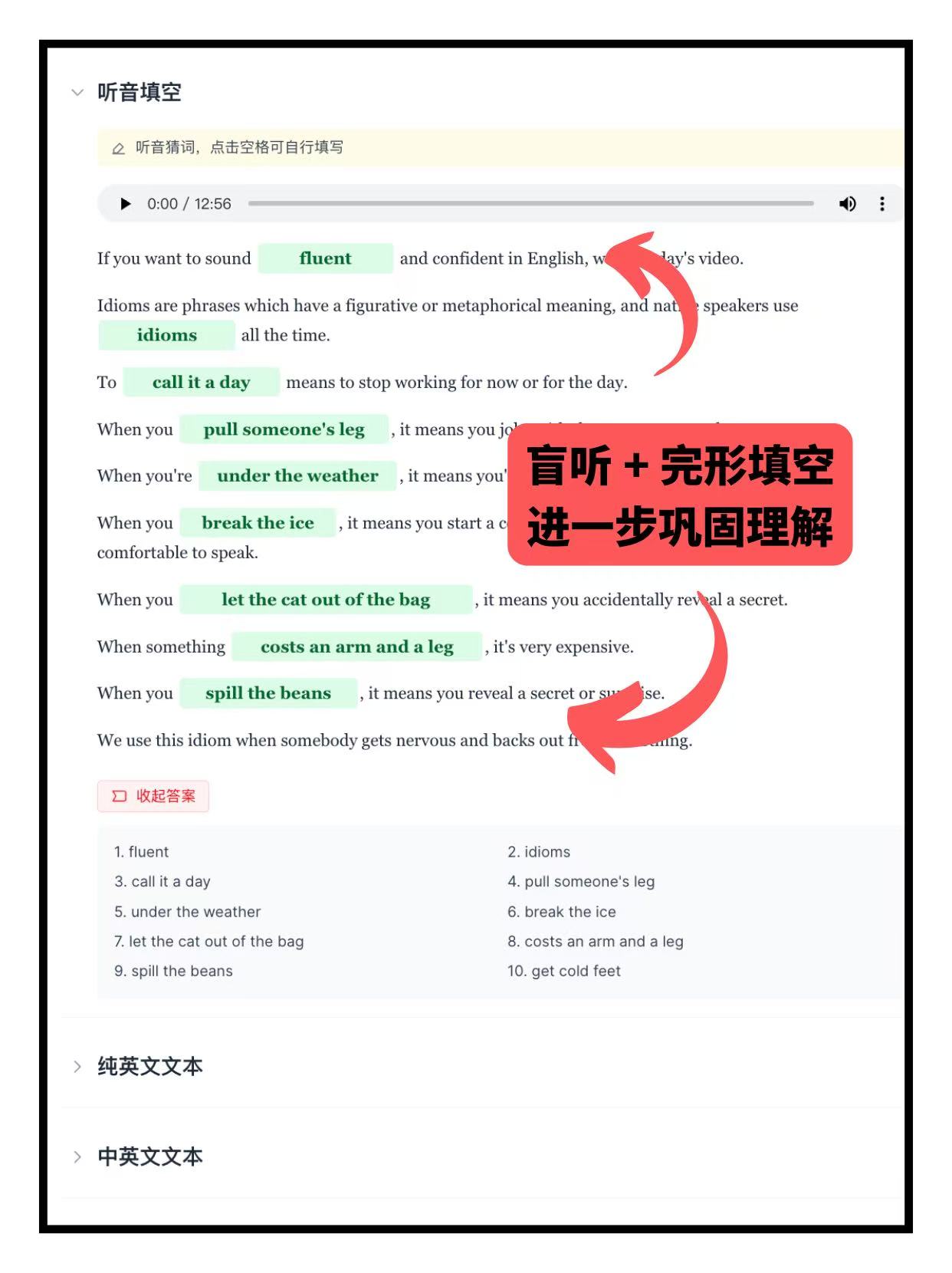
听音猜词,点击空格可自行填写

How do you know you're _____1_____ in English?

What is that one thing? Well, that is _____2_____.

In English, it's _____3_____ vocabulary, grammatical patterns, speech patterns, all that stuff in your brain, and it's regurgitating them in your dreams.

So now I'm going to teach you a _____4_____ that's super simple that you can use every single night to try to increase your chances of dreaming in English.

On the contrary, if you're doing something easier or something more _____5_____, for example, watching a show, reading a simple story, listening to English music, something that relaxes you, something that doesn't require too much effort, you're going to be using English, you're going to be exposed to English, but at the same time, you're also going to stay relaxed.

And the reason for this, and there have been studies done on this, is that if you do something before bed, it gives your brain a chance to _____6_____ what you learned, to let it digest in your memory.

Normally that's used _____7_____.

You could do your normal _____8_____.

And that is creating something called a dream _____9_____.

And you're more likely to _____10_____ that dream and also future dreams as well.

原声段落播放 · 点击任意句子即可播放

还没有选择句子

How do you know you're fluent in English?

你怎么知道自己{精通}英语?

Good question.

好问题。

And there's not one answer,

答案不止一个,

but there is one thing that if you can do means there's

但有一件事如果你能做到,就意味着

a good chance you're fluent,

你很可能已经{精通}了,

or at least you speak English very well.

或者至少你的英语说得很好。