返回

别再在脑子里翻译了!(如何用英语思考)

STOP Translating in Your Head! (How to THINK in English)

作者 · English At The Ready时长 · 9:16YouTube更新 · 2025/12/19
别再在脑子里翻译了!(如何用英语思考)
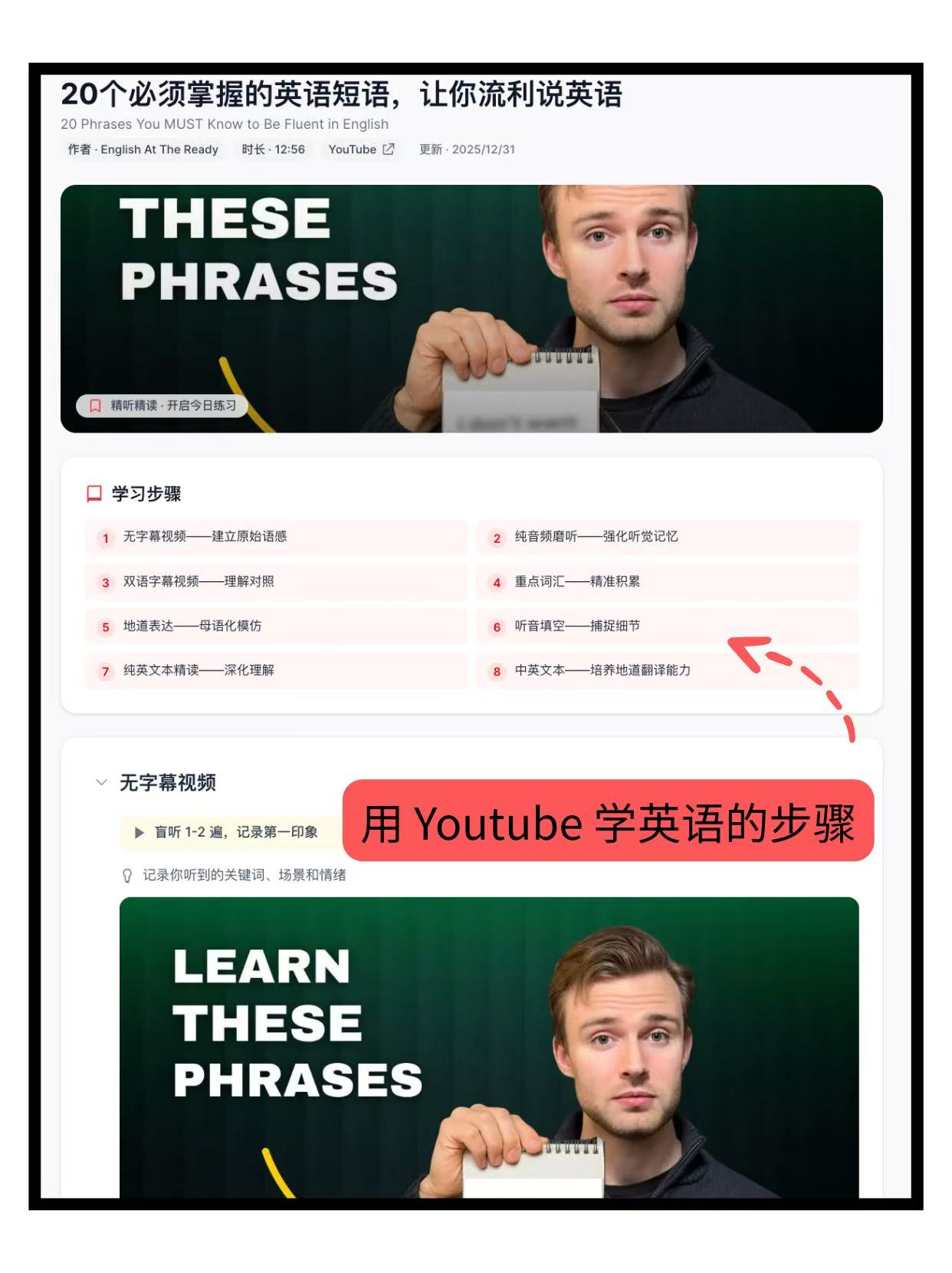
精听精读 · 开启今日练习

学习步骤

  1. 1无字幕视频——建立原始语感
  2. 2纯音频磨听——强化听觉记忆
  3. 3双语字幕视频——理解对照
  4. 4重点词汇——精准积累
  5. 5地道表达——母语化模仿
  6. 6听音填空——捕捉细节
  7. 7纯英文本精读——深化理解
  8. 8中英文本——培养地道翻译能力
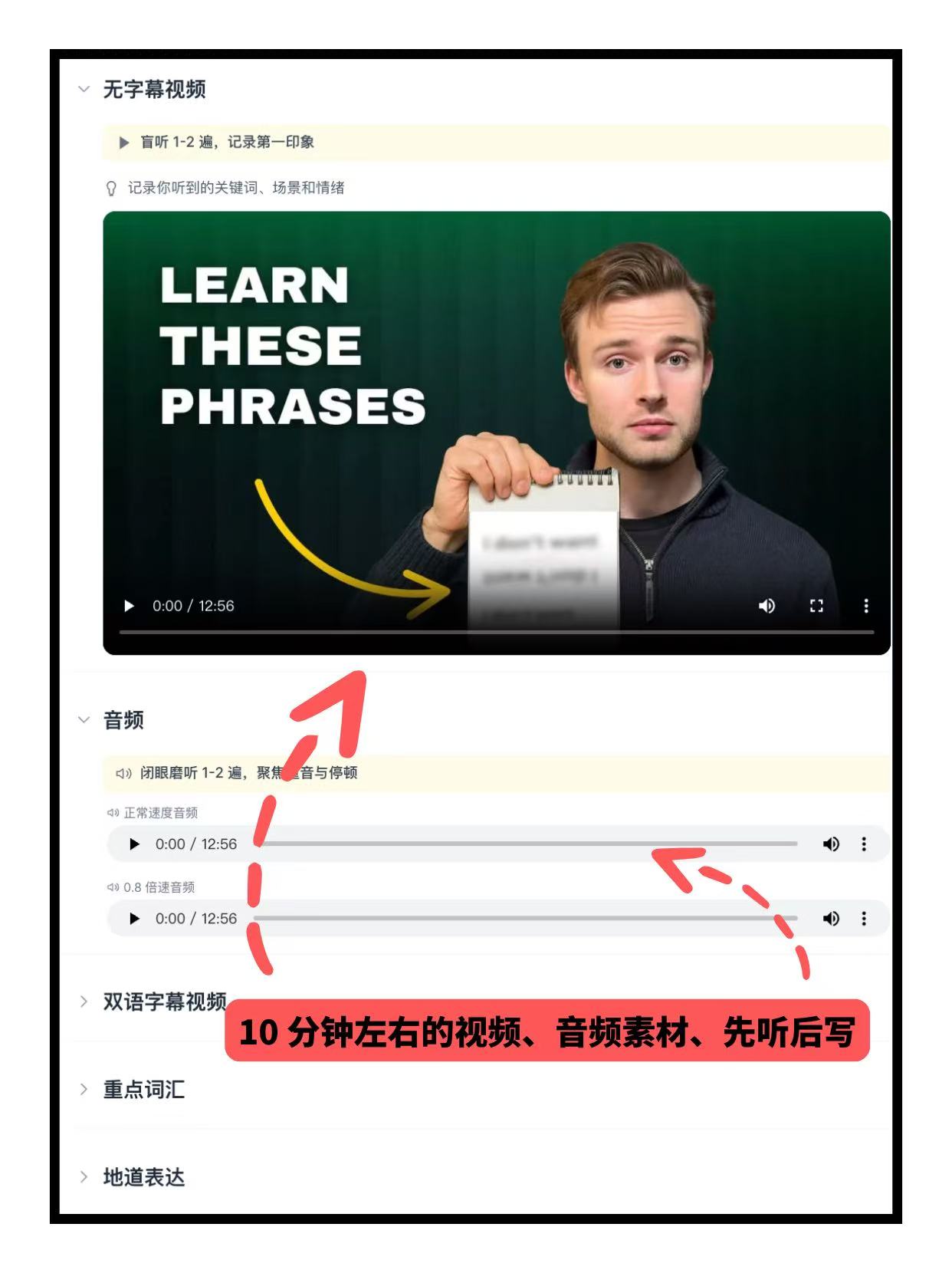
盲听 1-2 遍,记录第一印象

记录你听到的关键词、场景和情绪

闭眼磨听 1-2 遍,聚焦重音与停顿
正常速度音频
0.8 倍速音频
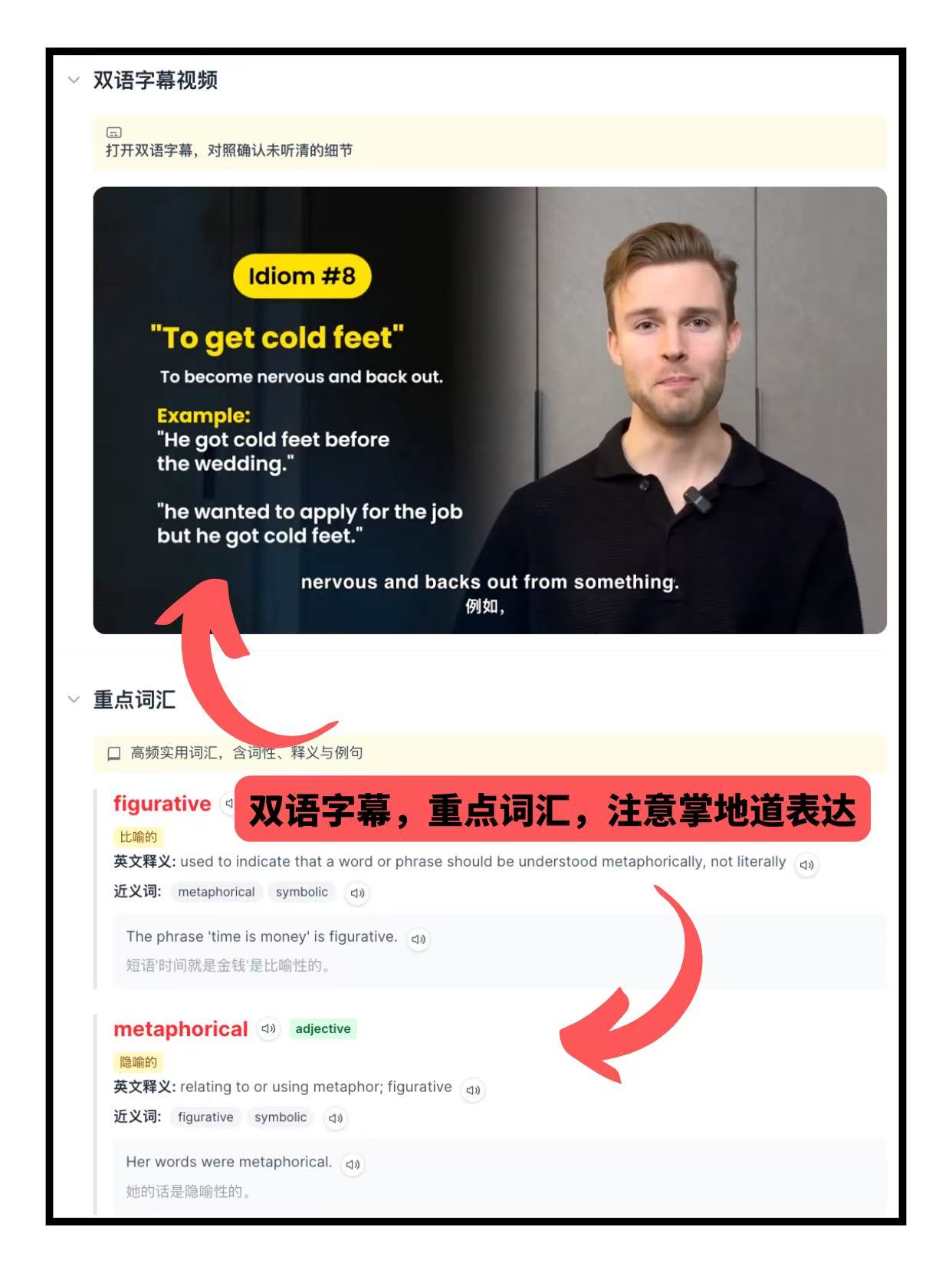
打开双语字幕,对照确认未听清的细节
高频实用词汇,含词性、释义与例句
fluentadjective
流利的
英文释义: able to express oneself easily and articulately in a language
近义词:
proficientarticulateeloquent

She is fluent in three languages.

她能流利地说三种语言。

vehiclenoun
媒介
英文释义: a thing used to express, embody, or fulfill something
近义词:
mediummeansinstrument

Language is a vehicle for communication.

语言是交流的媒介。

transmitverb
传递
英文释义: to pass something from one place or person to another
近义词:
conveycommunicatetransfer

The radio transmits signals over long distances.

无线电可以远距离传递信号。

passiveadjective
被动的
英文释义: accepting or allowing what happens without active response
近义词:
inactivesubmissiveunresisting

He has a passive vocabulary of over 10,000 words.

他的被动词汇量超过一万个单词。

activeadjective
主动的
英文释义: engaging or ready to engage in physically energetic pursuits
近义词:
energeticdynamiclively

She has an active role in the project.

她在这个项目中扮演主动角色。

intermediateadjective
中级的
英文释义: coming between two things in time, place, or character
近义词:
middlemidwaymedian

He is at an intermediate level in French.

他的法语处于中级水平。

deliberatelyadverb
故意地
英文释义: consciously and intentionally; on purpose
近义词:
intentionallypurposelyknowingly

She deliberately ignored his question.

她故意忽略了他的问题。

instantaneousadjective
瞬间的
英文释义: occurring or done in an instant or instantly
近义词:
immediateinstantprompt

The response was almost instantaneous.

反应几乎是瞬间的。

exposurenoun
接触
英文释义: the state of being exposed to contact with something
近义词:
contactexperiencefamiliarity

Regular exposure to English will improve your fluency.

经常接触英语会提高你的流利度。

barriernoun
障碍
英文释义: a circumstance or obstacle that prevents communication or progress
近义词:
obstaclehindranceimpediment

Language can be a barrier to understanding.

语言可能是理解的障碍。

easier said than done

释义: Something that is more difficult to do than to talk about
中文: 说起来容易做起来难
用法: Used to describe tasks or actions that are simple in theory but hard in practice

Becoming fluent in English is easier said than done.

英语流利说起来容易做起来难。

look around

释义: To observe one's surroundings
中文: 环顾四周
用法: Often used when encouraging someone to observe their environment

You need to look around and identify the English word for everything you see.

你需要环顾四周,为你看到的一切找到英语单词。

on a daily basis

释义: Every day; regularly
中文: 每天;经常
用法: Used to describe actions or habits that occur every day

Your active vocabulary consists of the words you use on a daily basis.

你的主动词汇包括你每天使用的单词。

make sense

释义: To be understandable or logical
中文: 有意义;讲得通
用法: Used when something is clear or comprehensible

You know the vocabulary and it makes sense to you.

你知道这些词汇,而且对你来说讲得通。

keep track

释义: To monitor or record something regularly
中文: 记录;跟踪
用法: Often used when maintaining records or notes

Write it down and keep track in your notes app.

把它写下来,并在你的笔记应用中记录下来。

turn into

释义: To change or transform into something else
中文: 变成;转化为
用法: Used when something is converted or changed into another form

You can turn this into a game.

你可以把这变成一个游戏。

get the point

释义: To understand the main idea
中文: 明白要点
用法: Used when someone grasps the main idea of something

You get the point of the exercise.

你明白这个练习的要点。

come with

释义: To be a result or accompaniment of something
中文: 伴随;随之而来
用法: Used to describe something that happens as a result

This comes with exposure.

这是随着接触而来的。

over time

释义: Gradually; as time passes
中文: 随着时间的推移;逐渐
用法: Used to describe gradual changes or developments

You do it over weeks and months.

你会在几周和几个月的时间里逐渐做到。

see you in the next lesson

释义: A phrase used to indicate the speaker will meet the listener in a future session
中文: 下节课见
用法: Commonly used by teachers or instructors at the end of a lesson

I'll see you in the next lesson.

我们下节课见。

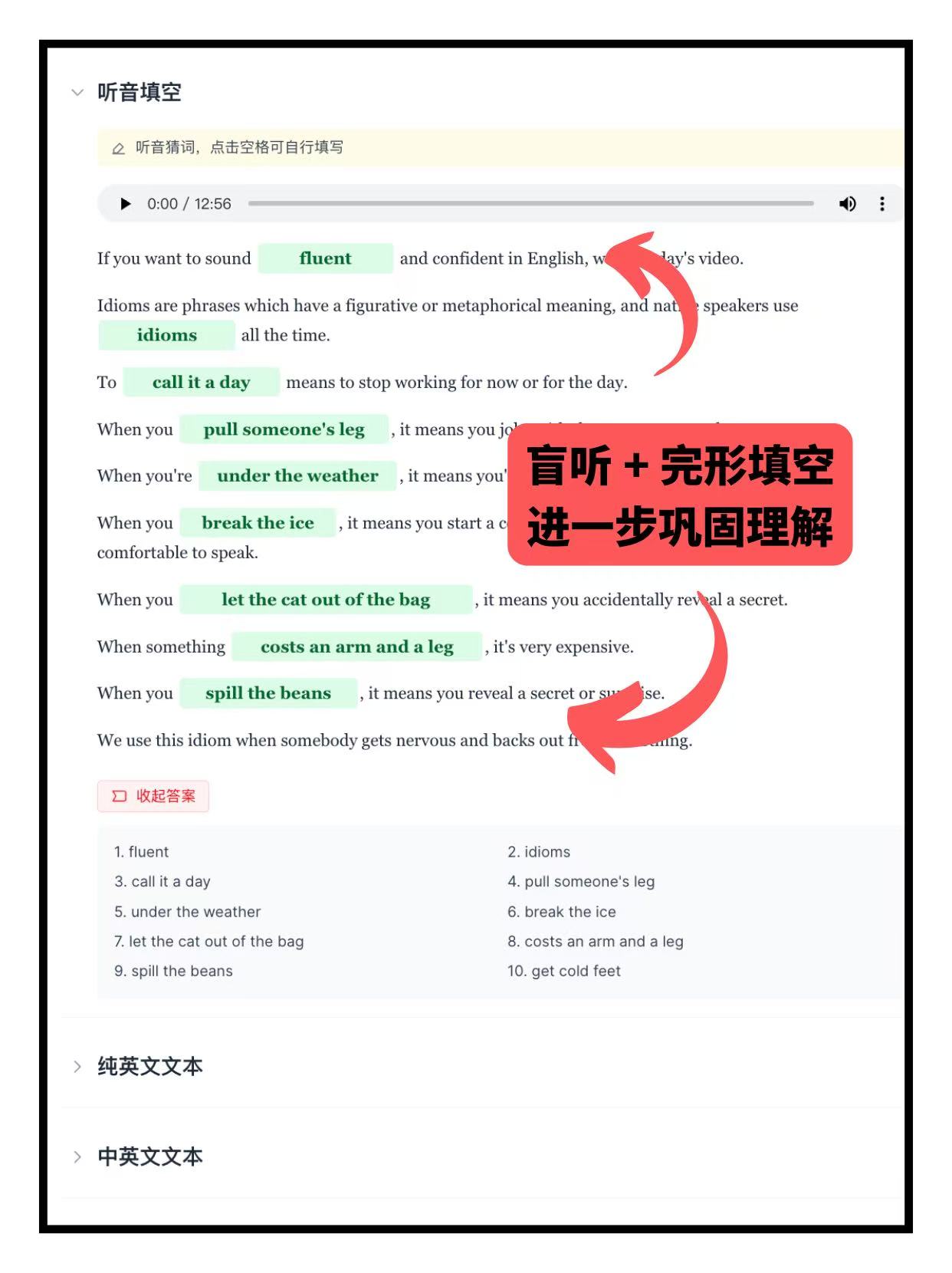
听音猜词,点击空格可自行填写

How do you know when you're _____1_____ in English?

You become fluent in English the moment you stop _____2_____ from your own language into English.

You become fluent in English the moment you can _____3_____ directly in English.

You can look around you, you can look at the _____4_____ around you, and you can identify the English word for everything you see.

And _____5_____ is fast.

We have active and we have passive _____6_____.

Your _____7_____ vocabulary is, well, consists of the words that you can understand, but that you don't use on a regular basis.

Your _____8_____ vocabulary consists of the words that you use regularly, every single day.

That's perfect, because you can look up the translation from your own language into English, write it down, keep track in your notes app.

And the goal here is to make it _____10_____.

原声段落播放 · 点击任意句子即可播放

还没有选择句子

How do you know when you're fluent in English?

你如何知道自己已经{流利}掌握英语了?

It's actually very simple.

其实非常简单。

You become fluent in English the moment you stop

当你不再需要从母语翻译成英语时,你就达到了{流利}水平。

translating from your own language into English.

这个过程自然停止。

You become fluent in English the moment

当你能够直接用英语思考时,

you can think directly in English.

便是{流利}掌握英语的标志。