每日学习10个英语单词(构建词汇量的最佳方法!)
Learn 10 English Words Every Day (The BEST method to build your vocabulary!)

学习步骤
- 1无字幕视频——建立原始语感
- 2纯音频磨听——强化听觉记忆
- 3双语字幕视频——理解对照
- 4重点词汇——精准积累
- 5地道表达——母语化模仿
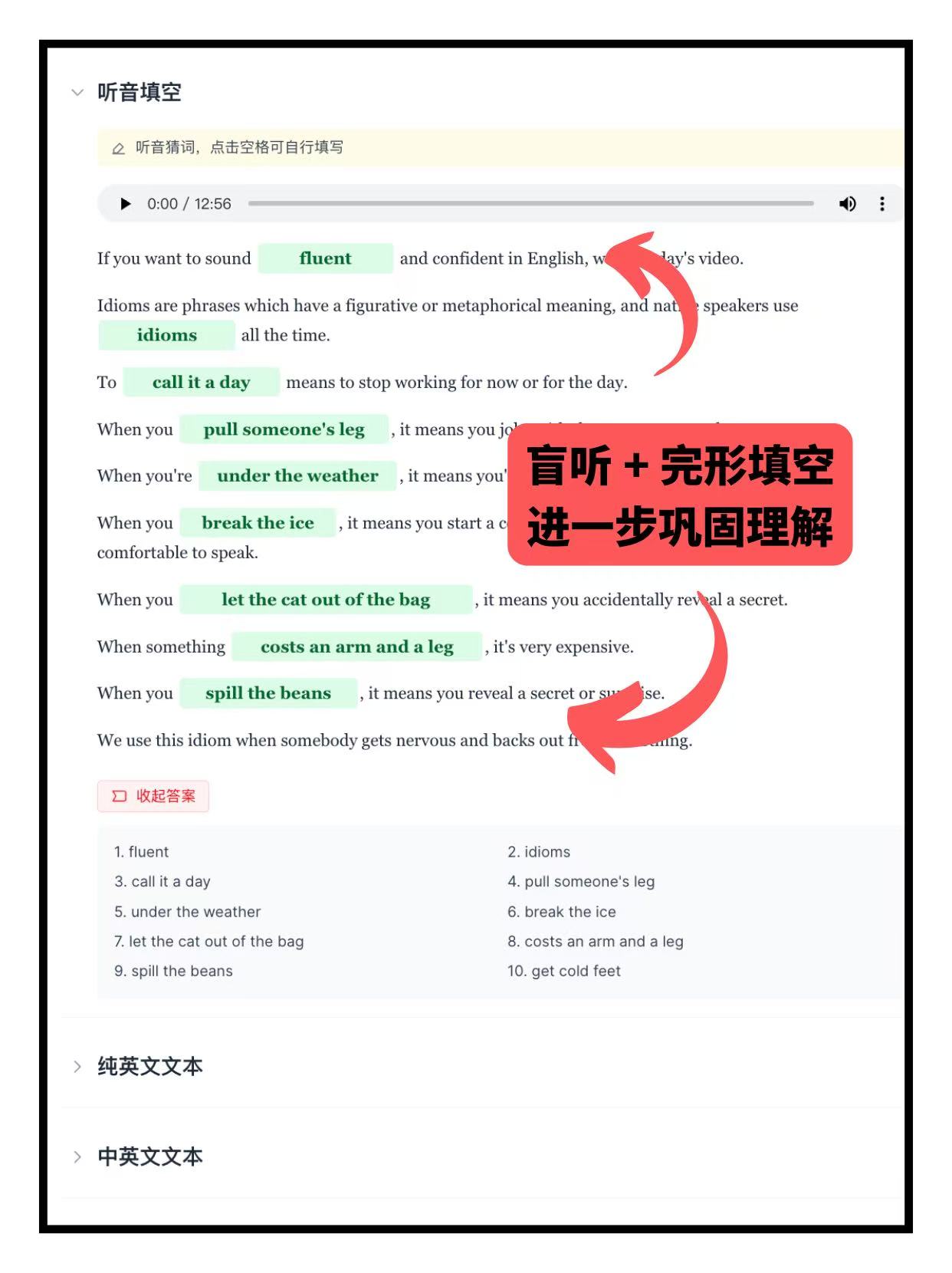
- 6听音填空——捕捉细节
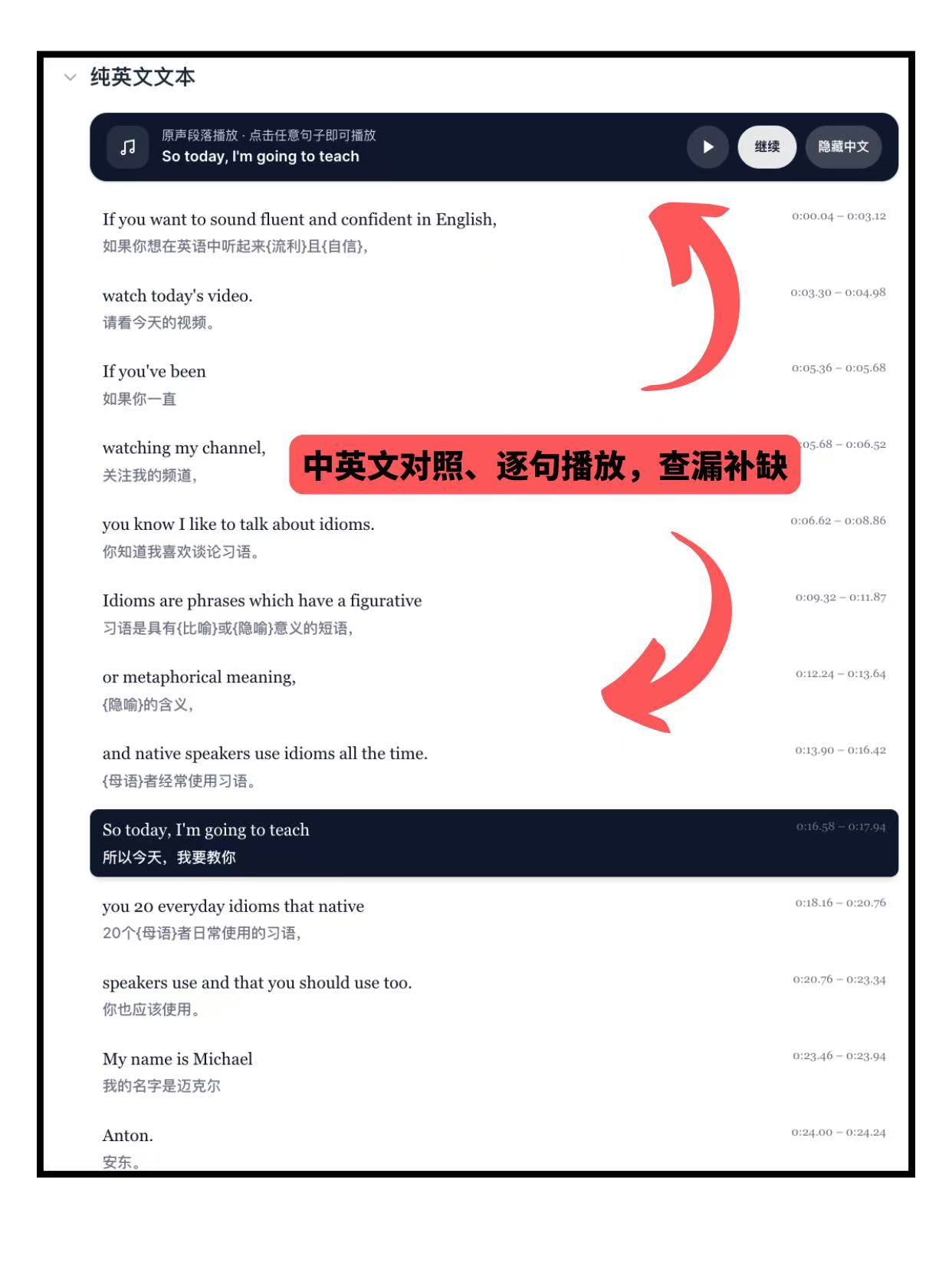
- 7纯英文本精读——深化理解
- 8中英文本——培养地道翻译能力
记录你听到的关键词、场景和情绪
She developed a strategy to improve her vocabulary.
她制定了一个提高词汇量的策略。
He speaks English fluently.
他英语说得很流利。
You will inevitably encounter new words when reading.
阅读时你不可避免地会遇到新单词。
Reviewing helps to consolidate what you've learned.
复习有助于巩固你所学的内容。
The words lying dormant in your brain need activation.
你大脑中休眠的单词需要被激活。
Forgetfulness is the price of laziness.
遗忘是懒惰的代价。
Regular exposure to English improves fluency.
经常接触英语可以提高流利度。
Repetition transforms memory into fluency.
重复将记忆转化为流利。
Tracking progress helps maintain motivation.
跟踪进度有助于保持动机。
Document your journey to fluency.
记录你通往流利的旅程。
expand your vocabulary
Reading books is a great way to expand your vocabulary.
阅读书籍是扩大词汇量的好方法。
speak English more confidently and fluently
Practicing daily helps you speak English more confidently and fluently.
每天练习能帮助你更自信和流利地说英语。
passive vocabulary
Her passive vocabulary is large, but she struggles to use many words in conversation.
她的被动词汇量很大,但在对话中很难使用这些词汇。
on a regular basis
She exercises on a regular basis to stay healthy.
她定期锻炼以保持健康。
come across
I came across an interesting article while browsing the internet.
我在浏览互联网时偶然发现了一篇有趣的文章。
the old school way
He prefers taking notes the old school way, with pen and paper.
他更喜欢用传统的纸笔方式记笔记。
lying dormant
The skills he learned years ago are lying dormant in his mind.
他多年前学到的技能在他的脑海中处于休眠状态。
on the right track
If you're practicing daily, you're on the right track to fluency.
如果你每天练习,你就在通往流利的正确轨道上。
put things in context
Hearing her story really put things in context for me.
听她的故事真的让我更好地理解了背景。
track your progress
Keeping a journal helps you track your progress in language learning.
记日记能帮助你跟踪语言学习的进展。
In today's video, I'm going to give you a _____1_____ that you can use to learn 10 words every day.
Now, 10 words every day is about 300 words every month. But how many words do you actually need to know to become fluent in a language?
If you're at the A1 or the beginner level, you need about 500 to 1,000 words. To be considered A2 or elementary, you need 1,000 to 2,000 words in your _____3_____.
But it's not just about learning new words, because you can have a huge _____4_____ vocabulary.
Let's talk about step one. This is what I call the _____5_____ phase.
When you're listening to a podcast, you can follow along with the _____6_____ and you might come across new words there.
You can also write down that _____7_____ because we are designed as humans to remember emotions and to remember how we felt.
Step two is designed to help you _____8_____ those words that are lying dormant in your brain.
Now, on to step three, which I call the memory phase. Remember this. Forgetfulness is the price of laziness. If you're lazy and you don't _____9_____ what you learned, you will forget it.
I want you to create a 30-day _____10_____. You can use a physical chart, you can write it out by hand, you can use Excel, you can use Google Sheets, you can use Notion, if you're familiar with Notion.
原声段落播放 · 点击任意句子即可播放
还没有选择句子
In today's video,
在今天的视频中,
I'm going to give you a strategy that
我将给你一个{策略},
you can use to learn 10 words every day,
你可以用它每天学习10个单词,
so you'll be able to expand your vocabulary and
这样你就能扩大词汇量
speak English more confidently and fluently.
并更自信、{流利}地说英语。
Now,
现在,