返回

为什么你的英语没有进步(立即这样做)

Why your English is not getting better (do this now)

作者 · English At The Ready时长 · 7:25更新 · 2026/01/05
为什么你的英语没有进步(立即这样做)
精听精读 · 开启今日练习

学习步骤

  1. 1无字幕视频——建立原始语感
  2. 2纯音频磨听——强化听觉记忆
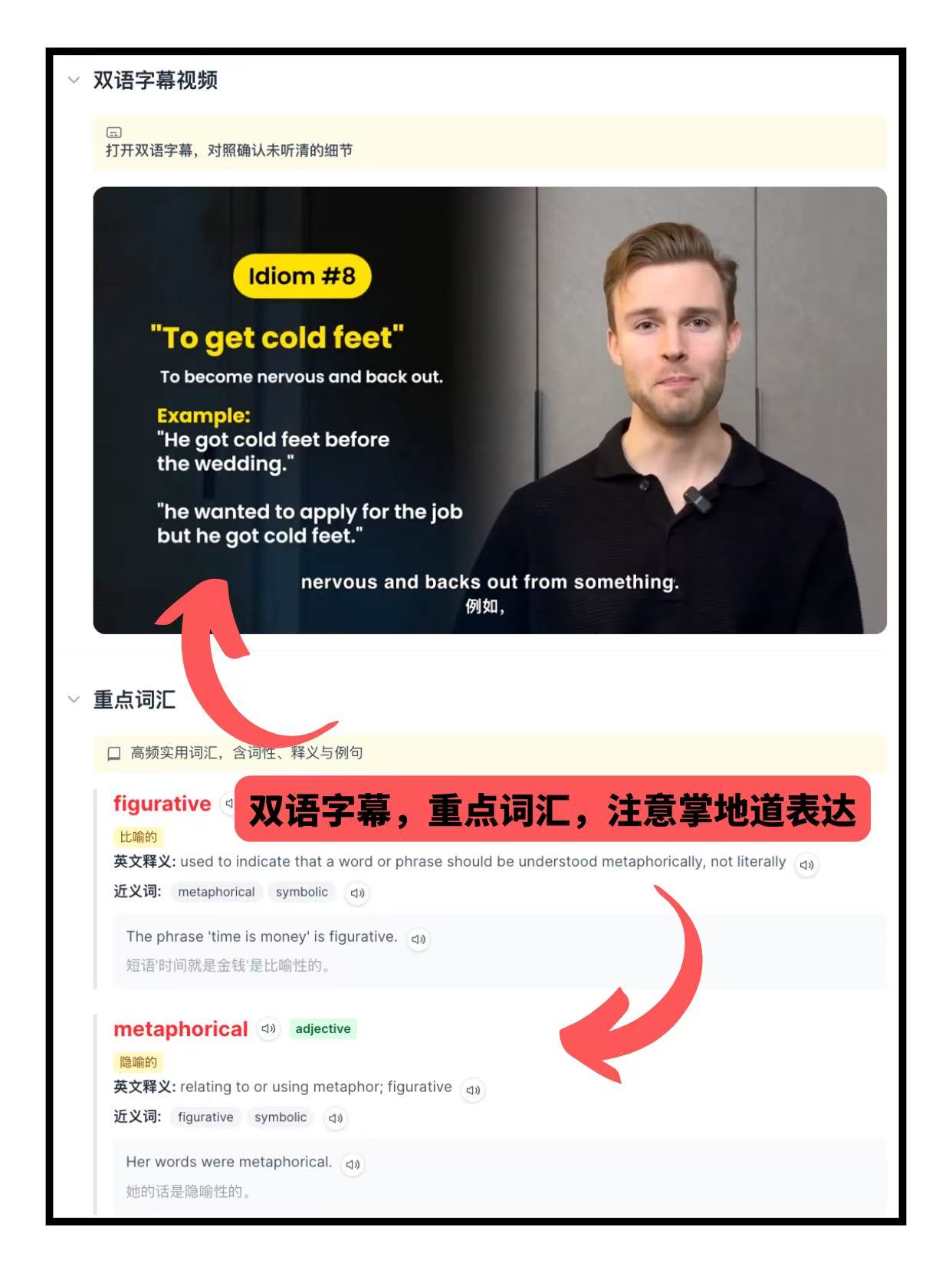
  3. 3双语字幕视频——理解对照
  4. 4重点词汇——精准积累
  5. 5地道表达——母语化模仿
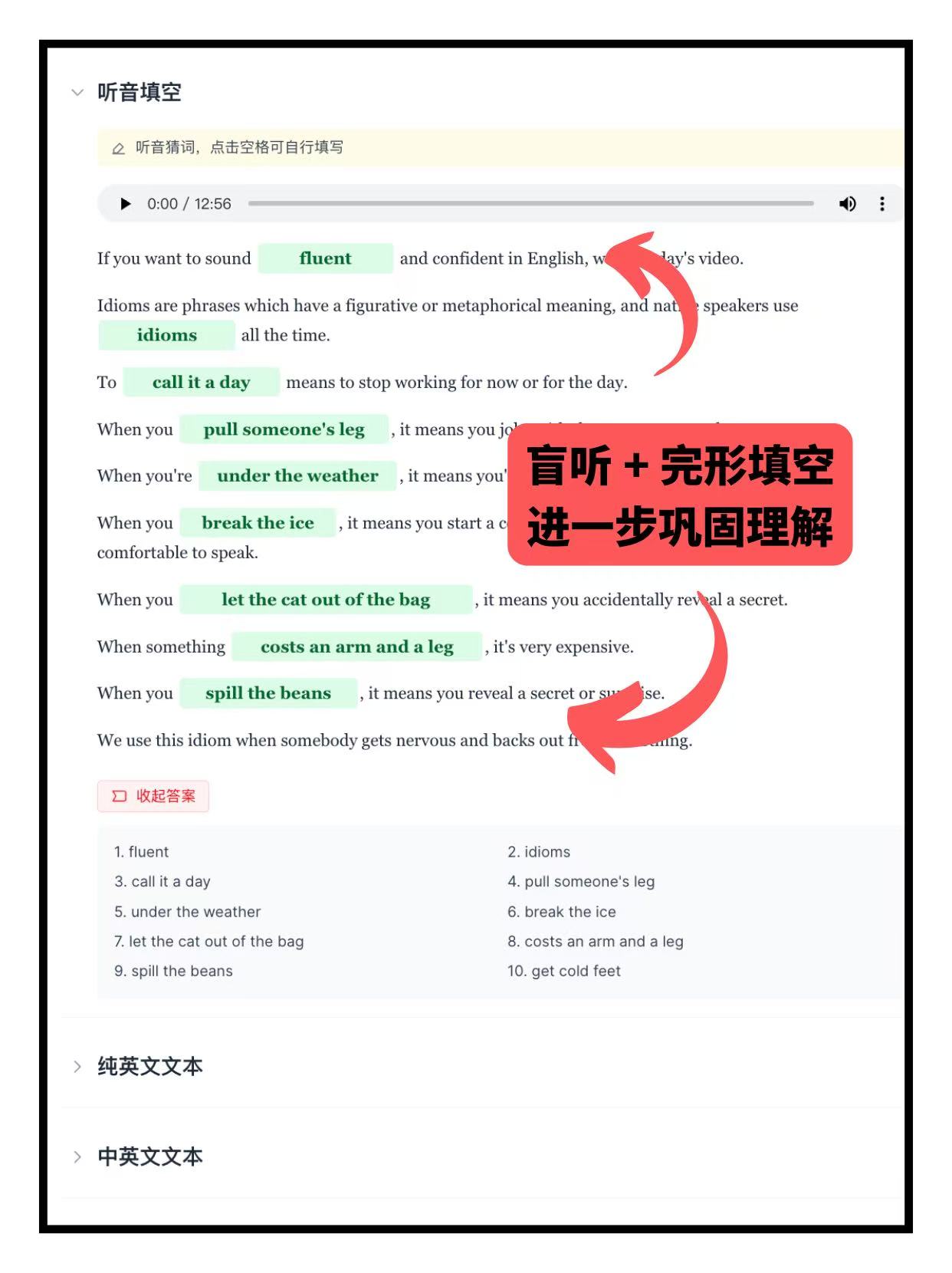
  6. 6听音填空——捕捉细节
  7. 7纯英文本精读——深化理解
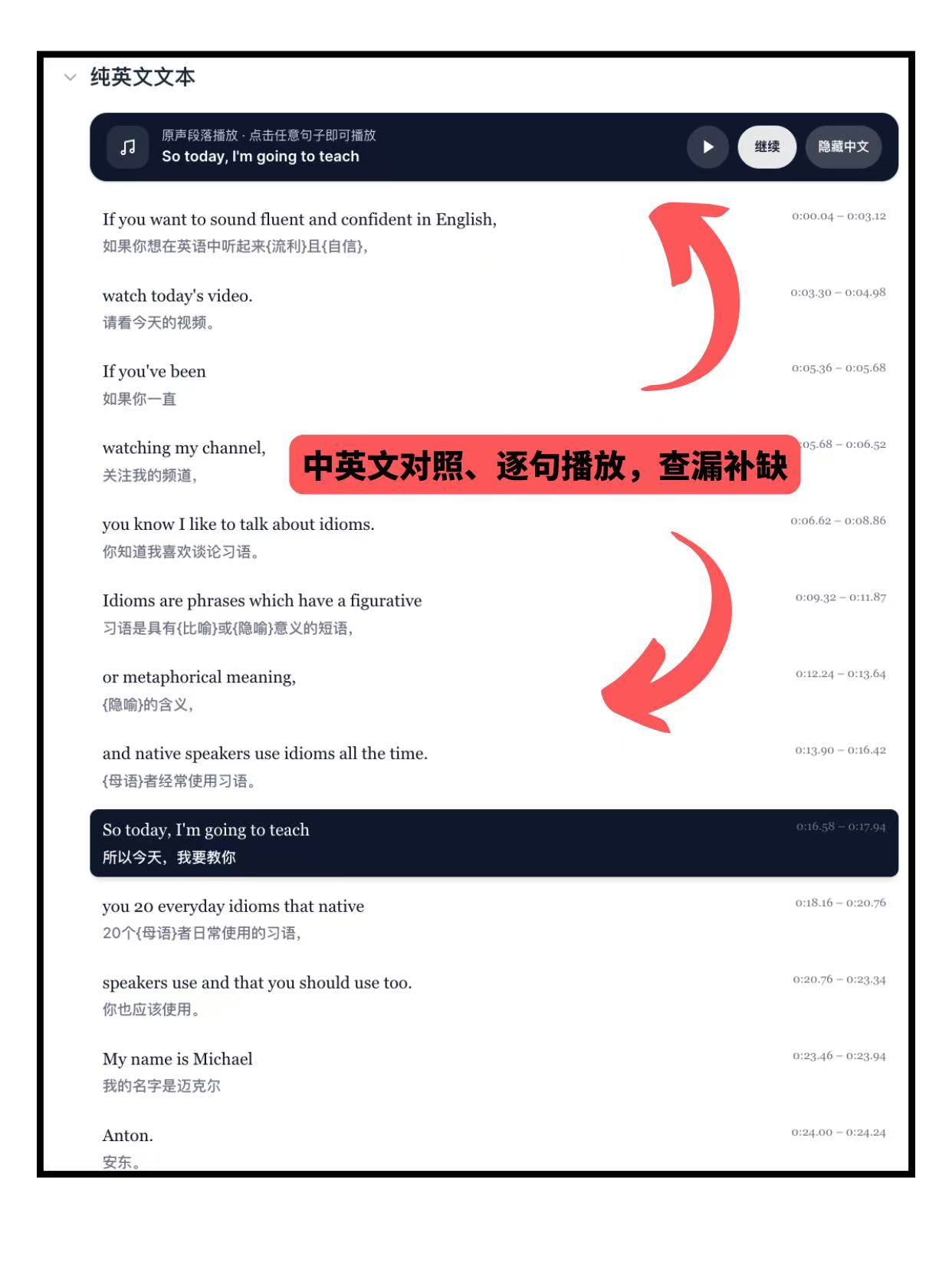
  8. 8中英文本——培养地道翻译能力
盲听 1-2 遍,记录第一印象

记录你听到的关键词、场景和情绪

闭眼磨听 1-2 遍,聚焦重音与停顿
正常速度音频
0.8 倍速音频
打开双语字幕,对照确认未听清的细节
高频实用词汇,含词性、释义与例句
fluencynoun
流利
英文释义: the ability to speak or write a language easily and accurately
近义词:
proficiencyeloquence

Achieving fluency in English requires consistent practice.

要达到英语流利需要持续的练习。

Dunning-Kruger effectnoun
邓宁-克鲁格效应
英文释义: a cognitive bias wherein people with low ability at a task overestimate their ability
近义词:
overconfidence effect

The Dunning-Kruger effect explains why beginners often feel overly confident.

邓宁-克鲁格效应解释了为什么初学者常常过度自信。

shadowverb
跟读
英文释义: to imitate or follow someone closely, especially in speech
近义词:
imitatemimic

Shadowing native speakers can improve your pronunciation.

跟读母语者可以提高你的发音。

conjugationsnoun
动词变位
英文释义: the variation of the form of a verb in an inflected language
近义词:
inflections

Learning verb conjugations is essential for mastering English.

学习动词变位是掌握英语的关键。

phrasal verbsnoun
短语动词
英文释义: a combination of a verb and an adverb or preposition
近义词:
multi-word verbs

Phrasal verbs are common in everyday English.

短语动词在日常英语中很常见。

IELTSnoun
雅思考试
英文释义: International English Language Testing System
近义词:
English proficiency test

She scored high on the IELTS exam.

她在雅思考试中取得了高分。

comfort zonenoun
舒适区
英文释义: a situation where one feels safe or at ease
近义词:
safe space

Stepping out of your comfort zone is necessary for growth.

走出舒适区对成长是必要的。

accentnoun
口音
英文释义: a distinctive way of pronouncing a language
近义词:
pronunciationintonation

His British accent is very charming.

他的英国口音非常迷人。

pronunciationnoun
发音
英文释义: the way in which a word is pronounced
近义词:
enunciationarticulation

Correct pronunciation is crucial for clear communication.

正确的发音对清晰的交流至关重要。

cognitive biasnoun
认知偏差
英文释义: a systematic pattern of deviation from norm or rationality in judgment
近义词:
mental bias

Being aware of cognitive biases can improve decision-making.

意识到认知偏差可以改善决策。

feel stuck

释义: To feel unable to make progress or move forward
中文: 感觉停滞不前
用法: Often used when someone is not seeing improvement despite effort

I've been studying English for months but I feel stuck.

我已经学了几个月英语,但感觉停滞不前。

big picture

释义: The overall perspective or most important aspects of something
中文: 大局,整体情况
用法: Used when emphasizing the need to consider all aspects rather than details

Don't worry about small mistakes - think about the big picture.

不要担心小错误 - 要考虑大局。

no pain, no gain

释义: You have to work hard or endure difficulties to achieve something
中文: 没有付出就没有收获
用法: Common motivational phrase about effort and results

Studying English every day is tough, but no pain, no gain!

每天学习英语很辛苦,但没有付出就没有收获!

at all costs

释义: No matter what must be done or sacrificed
中文: 不惜一切代价
用法: Emphasizes strong determination to avoid something

You should avoid forming bad habits at all costs.

你应该不惜一切代价避免形成坏习惯。

long story short

释义: To tell something briefly without details
中文: 长话短说
用法: Used when summarizing or getting to the main point

Long story short, the only way to improve is to practice.

长话短说,提高的唯一方法就是练习。

get out of your comfort zone

释义: To do things that are unfamiliar or make you uncomfortable
中文: 走出舒适区
用法: Common advice for personal growth and learning

To improve your speaking, you need to get out of your comfort zone.

要提高口语,你需要走出舒适区。

push things off

释义: To postpone or delay doing something
中文: 拖延,推迟
用法: Often implies procrastination

Don't push things off to later - start studying now.

不要拖延 - 现在就开始学习。

at the end of the day

释义: When everything is considered; ultimately
中文: 归根结底
用法: Used to introduce a final, important point

At the end of the day, consistent practice is what matters.

归根结底,持续的练习才是最重要的。

pay extra attention

释义: To focus more carefully than usual
中文: 格外注意
用法: Used when emphasizing careful observation

Pay extra attention to how native speakers move their mouths.

要格外注意母语者如何移动嘴巴。

put yourself in

释义: To place yourself intentionally in a situation
中文: 让自己处于
用法: Often used with challenging or uncomfortable situations

Put yourself in difficult situations to improve faster.

让自己处于困难的情境中以更快提高。

听音猜词,点击空格可自行填写

If you've been learning English for a long time, but you still feel and you feel like your English is not improving, this video is for you.

Instead, what's really happening is your time frame has .

Now, as you reach the B1, B2, and C1 levels, your time frame .

Maybe you've heard of the effect.

You need to accept that fluency is a , and it's a long-term journey.

But if you can get your English close to that point, I would definitely consider you .

Forming bad and repeating them.

If that's you, you need to native speakers.

Another common problem is that you might lack when you speak English.

The only way to overcome this is, again, to get out of your zone, to put yourself in difficult situations, and speak some more.

原声段落播放 · 点击任意句子即可播放

还没有选择句子

If you've been learning English for a long time,

如果你学习英语已经很长时间了,

but you still feel stuck and you feel like your

但仍然感到停滞不前,觉得自己的

English is not improving,

英语水平没有提高,

this video is for you.

那么这个视频就是为你准备的。

My name is Michael Anton.

我叫迈克尔·安东。

I'm the founder of

我是