返回

母语者关于语法的谎言

Native Speakers Are Lying to You About Grammar

作者 · English At The Ready时长 · 10:51更新 · 2026/01/05
母语者关于语法的谎言
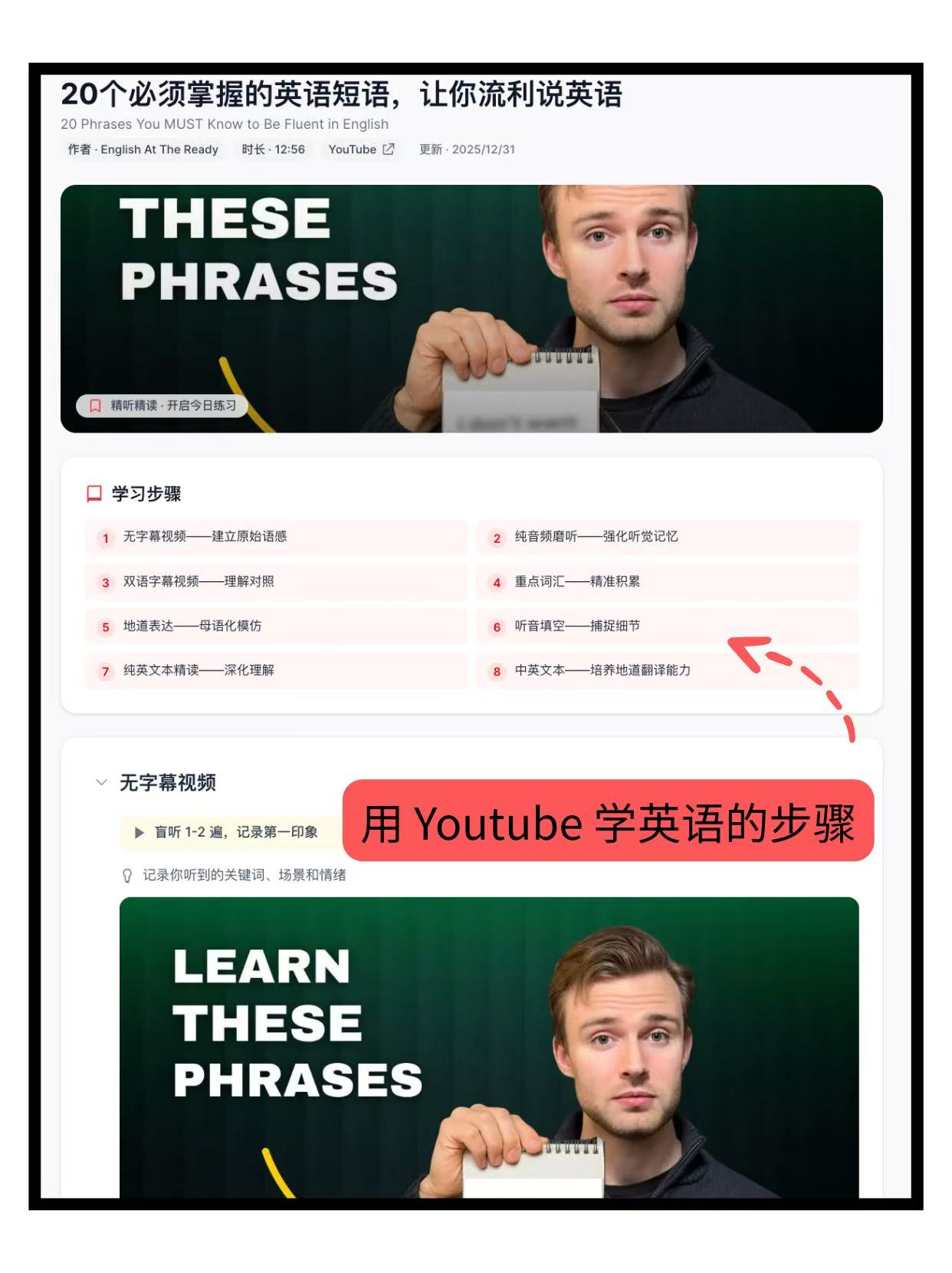
精听精读 · 开启今日练习

学习步骤

  1. 1无字幕视频——建立原始语感
  2. 2纯音频磨听——强化听觉记忆
  3. 3双语字幕视频——理解对照
  4. 4重点词汇——精准积累
  5. 5地道表达——母语化模仿
  6. 6听音填空——捕捉细节
  7. 7纯英文本精读——深化理解
  8. 8中英文本——培养地道翻译能力
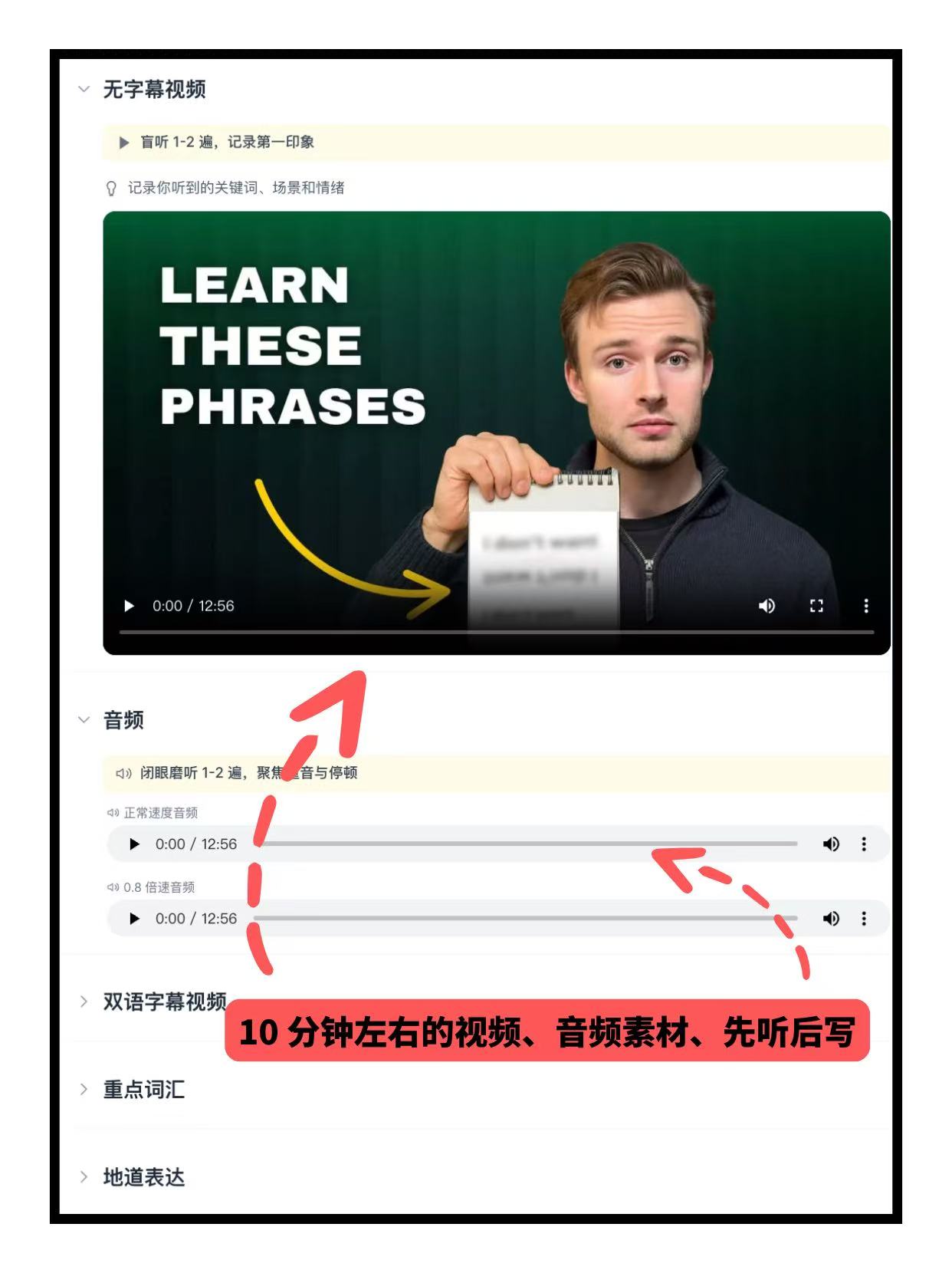
盲听 1-2 遍,记录第一印象

记录你听到的关键词、场景和情绪

闭眼磨听 1-2 遍,聚焦重音与停顿
正常速度音频
0.8 倍速音频
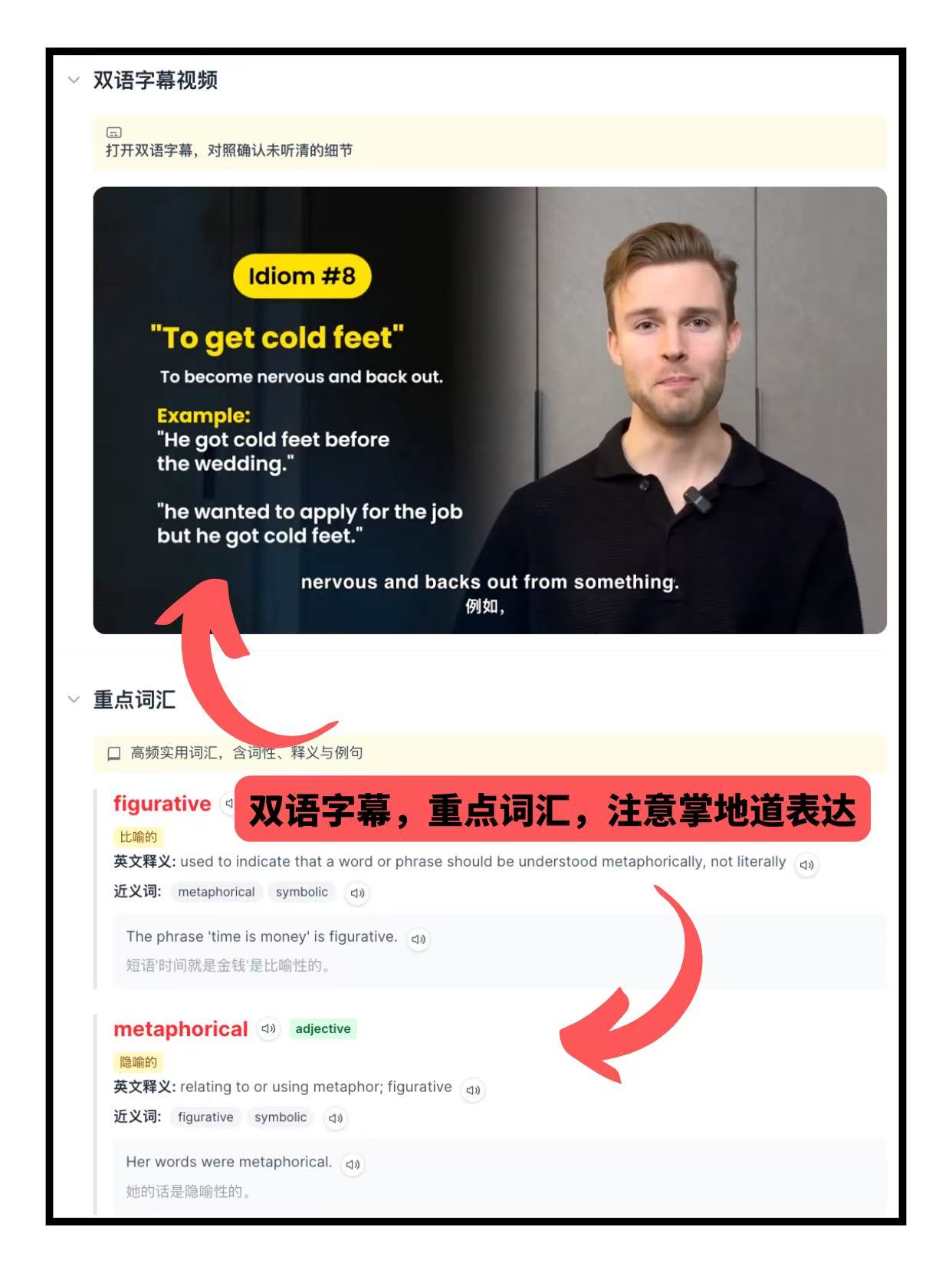
打开双语字幕,对照确认未听清的细节
高频实用词汇,含词性、释义与例句
conjugationnoun
动词变化
英文释义: the variation of the form of a verb in an inflected language.
近义词:
inflectiondeclension

The conjugation of irregular verbs can be tricky.

不规则动词的变化可能很复杂。

auxiliaryadjective
辅助的
英文释义: providing supplementary or additional help and support.
近义词:
supplementaryadditional

In English, 'do' is often used as an auxiliary verb.

在英语中,'do'常用作助动词。

contractionnoun
缩略形式
英文释义: a shortened form of a word or words.
近义词:
abbreviationshortening

'Don't' is a contraction of 'do not'.

'Don't'是'do not'的缩略形式。

prepositionnoun
介词
英文释义: a word governing, and usually preceding, a noun or pronoun and expressing a relation to another word or element in the clause.
近义词:
relational word

Words like 'in', 'on', and 'at' are prepositions.

像'in'、'on'和'at'这样的词是介词。

disregardverb
忽视
英文释义: pay no attention to; ignore.
近义词:
ignoreoverlook

You can disregard the old rules.

你可以忽视这些旧规则。

emphasizeverb
强调
英文释义: give special importance or prominence to (something) in speaking or writing.
近义词:
highlightstress

She emphasized the importance of good grammar.

她强调了良好语法的重要性。

subjectnoun
主语
英文释义: a noun or noun phrase functioning as one of the main components of a clause.
近义词:
topictheme

In the sentence 'She runs fast', 'she' is the subject.

在句子'She runs fast'中,'she'是主语。

objectnoun
宾语
英文释义: a noun or noun phrase governed by an active transitive verb or by a preposition.
近义词:
recipienttarget

In the sentence 'She gave him a book', 'him' and 'book' are objects.

在句子'She gave him a book'中,'him'和'book'是宾语。

slangnoun
俚语
英文释义: a type of language consisting of words and phrases that are regarded as very informal.
近义词:
colloquialismjargon

'Ain't' is considered slang.

'Ain't'被认为是俚语。

imperfectionnoun
不完美
英文释义: a fault, blemish, or undesirable feature.
近义词:
flawdefect

We have to live with imperfection.

我们必须接受不完美。

Guess what?

释义: Used to introduce surprising or interesting information.
中文: 用于引出令人惊讶或有趣的信息。
用法: Informal, conversational.

Guess what? I got the job!

猜猜看?我得到那份工作了!

in reality

释义: Actually; in fact.
中文: 实际上;事实上。
用法: Used to contrast with expectations or assumptions.

He seems confident, but in reality, he's very nervous.

他看起来很自信,但实际上他很紧张。

pay attention to

释义: To focus on or take notice of something.
中文: 关注或注意到某事。
用法: Commonly used in instructions or reminders.

Pay attention to the details.

注意细节。

first up

释义: First in order; the first item to be discussed.
中文: 首先;第一个要讨论的项目。
用法: Informal, often used in presentations or lists.

First up on our agenda is the budget report.

我们议程上的第一项是预算报告。

moving on

释义: Transitioning to the next topic or item.
中文: 转到下一个话题或项目。
用法: Used to smoothly shift focus.

Moving on, let's discuss the next project.

接下来,让我们讨论下一个项目。

let's be honest

释义: Used to introduce a frank or truthful statement.
中文: 用于引出一个坦率或真实的陈述。
用法: Often used to express sincerity.

Let's be honest, this isn't working.

老实说,这行不通。

to be honest

释义: Used to express sincerity or frankness.
中文: 用于表达真诚或坦率。
用法: Commonly used in conversation.

To be honest, I didn't like the movie.

说实话,我不喜欢那部电影。

take away

释义: To learn or understand something from an experience.
中文: 从经验中学到或理解某事。
用法: Often used in educational contexts.

The key takeaway from the lecture was the importance of teamwork.

讲座的关键要点是团队合作的重要性。

at the end of the day

释义: Ultimately; when everything is considered.
中文: 最终;考虑到一切因素后。
用法: Used to summarize or conclude.

At the end of the day, it's your decision.

归根结底,这是你的决定。

live with

释义: To accept or tolerate something.
中文: 接受或容忍某事。
用法: Often used in contexts of imperfection or inconvenience.

You'll have to live with some imperfections.

你必须接受一些不完美之处。

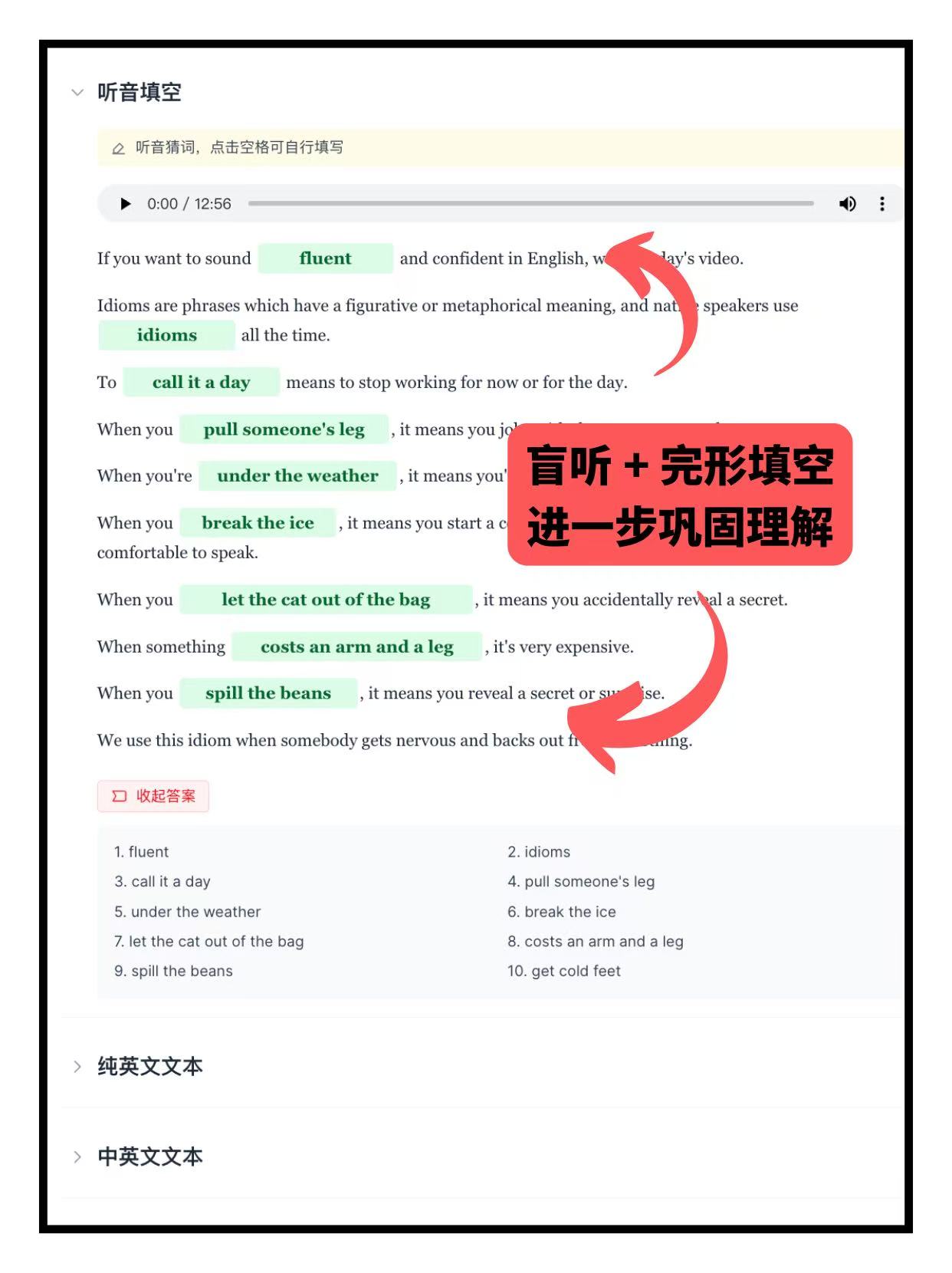
听音猜词,点击空格可自行填写

Guess what? Native English speakers make all the time when they speak English.

If you're like most students, you probably spent years learning English in school, studying all the rules, and trying to get everything perfect.

You'll often hear native speakers say things like, it's real hot today, or she's real nice, when the correct way of saying this would be, it's hot today, or she's really nice.

For example, instead of saying things like, you want to go? They might say, you want to go? They get rid of the word do a question.

Now, it's also very common for native speakers to write could of, or should of, or would of, when they mean could , should have, or would have.

When in reality, they should actually say, there a lot of cars on the road.

Something I heard a lot at school was to never end a sentence with a .

It's the same with starting sentences with or but.

For example, my friend and went to the grocery store.

For example, saying things like I don't know .

原声段落播放 · 点击任意句子即可播放

还没有选择句子

Guess what?

你猜怎么着?

Native English speakers make mistakes

英语母语者也会犯错

all the time when they speak English.

他们在说英语时经常出错。

If you're like most students,

如果你和大多数学生一样,

you probably spent years learning English in school,

你可能花了多年时间在学校学习英语,

studying all the grammar rules,

钻研各种语法规则,